FREE DOMESTIC SHIPPING*  •  TRACK MY ORDER

(972) 737-1282 Schedule A Call
Call now Schedule a call

Dehydrating 101 · Herbs

Dehydrated Herbs: How to Dry, Store & Use Herbs at Full Potency

Leafy, woody, medicinal, aromatic and root herbs — dried low and slow to lock in color, aroma and essential oils. Prepare by type, dry at 95–131 °F, condition, then store airtight away from light.

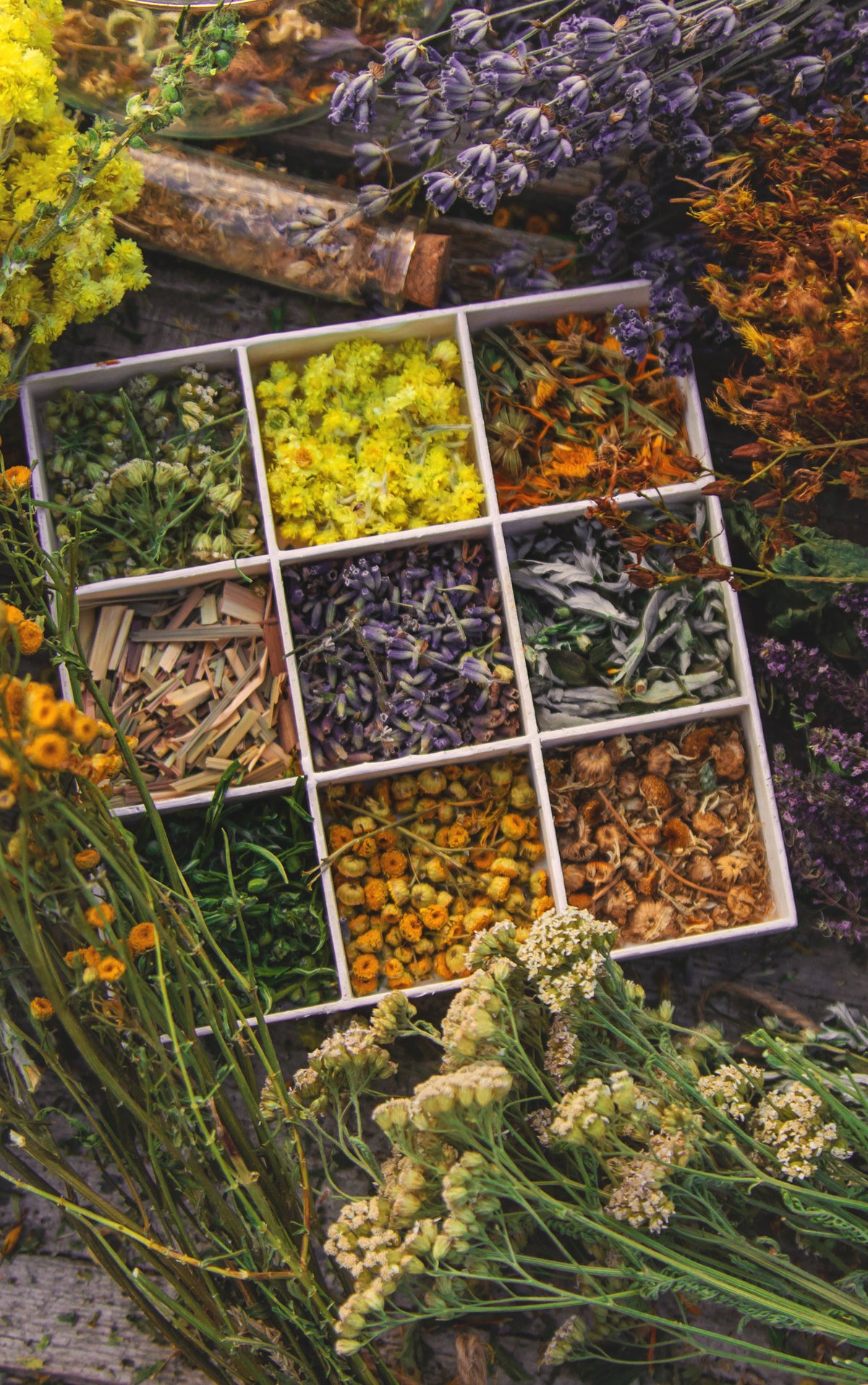
Fresh and dried medicinal herbs on a table

95–104 °F

Leaves & flowers

Low heat protects color and oils

122–131 °F

Most roots & rhizomes

Sliced evenly at 2–4 mm

3–14 h

Typical drying time

Chives fastest; licorice root longest

Up to 1 yr

Best flavor, stored well

Dark, dry and airtight; whole roots keep longest

Why dehydrate herbs?

Fresh herbs wilt, bruise and lose their aroma within days. Drying preserves flavor and fragrance for months — for home gardens, commercial kitchens, growers and manufacturers alike.

Preservation

Removing moisture slows the growth of bacteria, mold and yeast, so properly dried herbs keep far longer than fresh ones. Drying does not kill germs already on the leaves, so start with clean, healthy herbs.

Extending shelf life

Fresh herbs can deteriorate within days, even when refrigerated. Dehydrated herbs, when dried and stored correctly, can last for many months, making them a reliable pantry staple rather than a short-term ingredient.

Reducing food waste

Herbs are commonly discarded once they begin to wilt or discolor, despite still being perfectly usable. Dehydration allows excess harvests, bulk purchases, or surplus herbs to be preserved instead of thrown away, helping reduce waste in both home and commercial kitchens.

Flavor concentration

As moisture is removed during dehydration, the natural flavors and essential oils in herbs become more concentrated. This means smaller amounts are needed when cooking, while still delivering depth and intensity of flavor.

Convenience

Dehydrated herbs are easy to store, measure, and use. They require no refrigeration, can be kept on hand year-round, and are ready to use whenever needed, whether for everyday cooking or large-scale food preparation.

Versatility

Once dehydrated, herbs can be stored whole, crushed into flakes, ground into powders, or blended into seasoning mixes, rubs, and infused salts. Many herbs can also be used to make teas, infusions, and functional blends.

Saving money

Drying pays off most with herbs you grow yourself, garden surplus or bulk buys in season. Fresh herbs are mostly water, so a small grocery store bunch makes only a little dried herb.

Read the full introduction →

In the United States, fresh herbs play a vital role in cooking, flavor development, and traditional food preparation, but they’re also one of the most fragile and short-lived ingredients in the kitchen. You might have an herb garden at home, frequently purchase bunches from your local grocery store or farmers market, or harvest at scale for your business, but fresh herbs tend to wilt, bruise, and lose their aroma quickly if not used almost immediately. Dehydrating herbs is one of the most effective ways to preserve their flavor and fragrance, while significantly extending their shelf life.

Drying concentrates minerals and vitamin K by weight, but heat-sensitive vitamins are largely lost: dried basil keeps almost none of the vitamin C in fresh basil. [34] Dried herbs are not a replacement for fresh produce, but they are a practical way to bring flavor and plant compounds into meals, seasonings and blends year-round. Removing moisture slows the growth of bacteria and molds, but dried herbs can still carry germs such as Salmonella, so treat them like any other ingredient. [1]

Dehydrated herbs are also lightweight, compact, and easy to store, taking up far less space than fresh herbs and eliminating the need for refrigeration. When stored in airtight containers away from heat and light, dehydrated herbs maintain their flavor, aroma, and quality for extended periods, making them suitable for home kitchens, commercial food operations, growers, and food manufacturers. With the right preparation and equipment, herbs can be dehydrated efficiently and consistently, producing a high-quality end product that delivers reliable flavor, reduces waste, and offers long-term value.

So, what kind of herbs can you dehydrate, and what are the benefits of dehydrating herbs? See some that we’ve highlighted below and discover the many ways they can be used once dried.

Dehydrated leafy herbs

Soft-stemmed and high in moisture, leafy herbs dry quickly at low heat and keep their color and aroma beautifully. Drying is the easiest way to keep a garden surplus.

At a glance

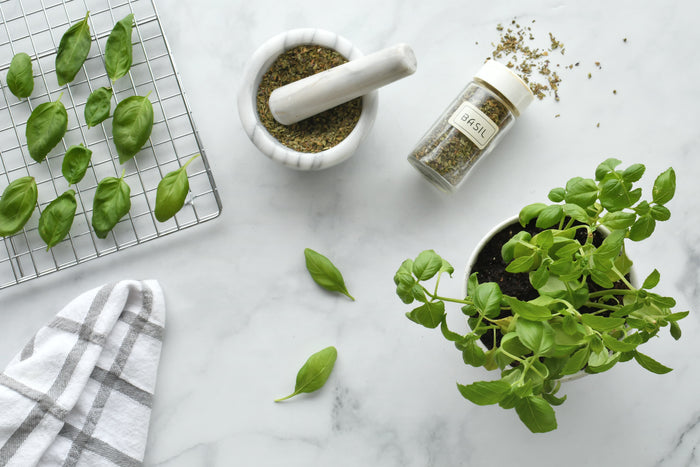
    Dehydrated basil

    Basil

    Deeper, slightly sweeter once dried. Best added early to cooked sauces.

    Drying
    4–6 h
    Temp
    95–104 °F
    Key compounds
    Vitamin K · eugenol
    Ways to use & full profile →

    Ways to use

    • Stir through tomato-based pasta sauces and soups.
    • Sprinkle over homemade pizza or focaccia before baking.
    • Blend into salad dressings or marinades.
    • Combine with oregano, thyme, and garlic powder to create a classic Italian seasoning.
    • Grind into a fine powder and mix into dips, savory muffins, or bread dough.
    • Mix into herb salts, or stir into oil made fresh to use the same day (see food safety).

    Tip: Because dried basil is more concentrated than fresh, it’s best added early in the cooking process so it can soften and fully release its flavor.

    Basil is one of the most widely used herbs in the world and one of the quickest to deteriorate after harvest. Its soft leaves bruise easily and can turn dark or slimy within days if not stored properly. If you’re successfully growing basil at home, you’ll know how quickly it can bolt and produce more leaves than you can possibly use. In much of the United States, basil thrives through late spring and summer, often peaking all at once, which makes dehydration a practical way to preserve that abundance rather than waste it.

    When dehydrated at a low temperature, basil retains much of its vibrant green color and signature aroma. The flavor becomes deeper and slightly sweeter, losing a little of the fresh peppery bite but gaining warmth and intensity. This makes dried basil especially suited to cooked dishes, where it has time to rehydrate and gradually release its oils into sauces and slow-simmered recipes.

    Dried basil is high in vitamin K, calcium, magnesium and iron, but most of the vitamins A and C in fresh basil are lost in drying. [34] It’s also rich in antioxidants and natural compounds such as eugenol, which have anti-inflammatory and antimicrobial properties. Regularly incorporating basil into meals can support immune health, digestion, and overall well-being, particularly when used consistently rather than occasionally.
    Dehydrated parsley

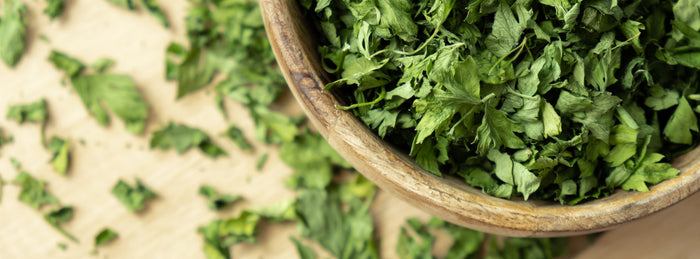
    Parsley

    Mild, clean and grassy. Flat-leaf and curly both hold their bright green.

    Drying
    4–6 h
    Temp
    95–104 °F
    Key compounds
    Vitamins C, K · folate · iron
    Ways to use & full profile →

    Ways to use

    • Sprinkle over eggs, roasted vegetables, and grilled fish.
    • Stir into soups, stews, and casseroles.
    • Blend into breadcrumbs for breaded meats or vegetable bakes.
    • Mix into herb butter or savory spreads.
    • Combine with chives and dill for a simple herb blend.
    • Grind into powder and add to savory baking or even smoothies for an extra boost of greens.

    Tip: Because parsley has a mild flavor, it can be used generously without overpowering a dish.

    Parsley is often treated as nothing more than a garnish, but it’s far more versatile than that. Both flat-leaf and curly varieties dehydrate beautifully and retain their bright green color when dried correctly. In many American kitchens, parsley is a year-round staple, yet fresh bunches are often only partially used before losing their crispness. Drying offers a simple way to extend its usability without compromising flavor.

    Fresh parsley has a mild, grassy flavor with a slight peppery edge, and once dried, it becomes more concentrated but still clean and fresh-tasting. It adds balance rather than dominance, which is why it works across almost every cuisine and pairs well with both delicate and stronger dishes.

    Weight for weight, dried parsley is packed with vitamins C and K and is a good source of folate, iron, and potassium, though a pinch-sized serving adds only small amounts. [34] It’s also high in antioxidants and chlorophyll, which are associated with supporting detoxification, immune health, and bone strength. Dehydrated parsley offers an easy way to add nutrients and color to meals without the need for constant fresh purchases.

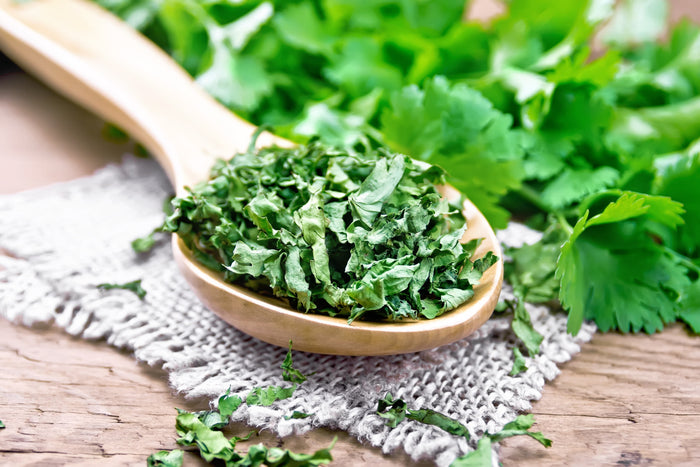
    Dehydrated cilantro

    Cilantro (coriander leaf)

    Loses its sharp citrus edge but keeps an earthy depth for curries and slow cooks.

    Drying
    4–6 h
    Temp
    95–104 °F
    Key compounds
    Vitamins A, C, K · potassium
    Ways to use & full profile →

    Ways to use

    • Add to curries, dal, and slow-cooked stews.
    • Blend into Mexican or Indian spice mixes.
    • Stir into rice dishes and pilafs.
    • Mix into marinades for chicken, lamb, or seafood.
    • Combine with cumin, chili powder, and garlic powder for a bold seasoning blend.
    • Grind into a fine powder for rubs or dry seasoning mixes.

    Tip: Because dried cilantro is milder than fresh, it often requires slightly more when cooking.

    Cilantro is one of those herbs people either love or hate, but there’s no denying its impact in cuisine. Fresh cilantro adds a bright, citrusy lift to dishes, yet it tends to wilt and darken quickly after harvest. In warm summer months, it can grow rapidly and bolt just as quickly, leaving you with more than you can use. Dehydration helps preserve that distinctive character for use beyond the growing season.

    While dried cilantro loses some of the sharp freshness of the raw leaves, it retains an earthy, herbal depth that works beautifully in curries, soups, and marinades. It is particularly useful in slow-cooked dishes, where it can rehydrate gradually and integrate into the base flavor of the meal rather than sitting on top.

    Weight for weight, dried cilantro is a great source of vitamins A, C, and K, as well as potassium and magnesium (a pinch-sized serving adds only small amounts), and it also contains naturally occurring compounds that may support digestion and gut health. Its traditional use in spice blends reflects both flavor and functional value.

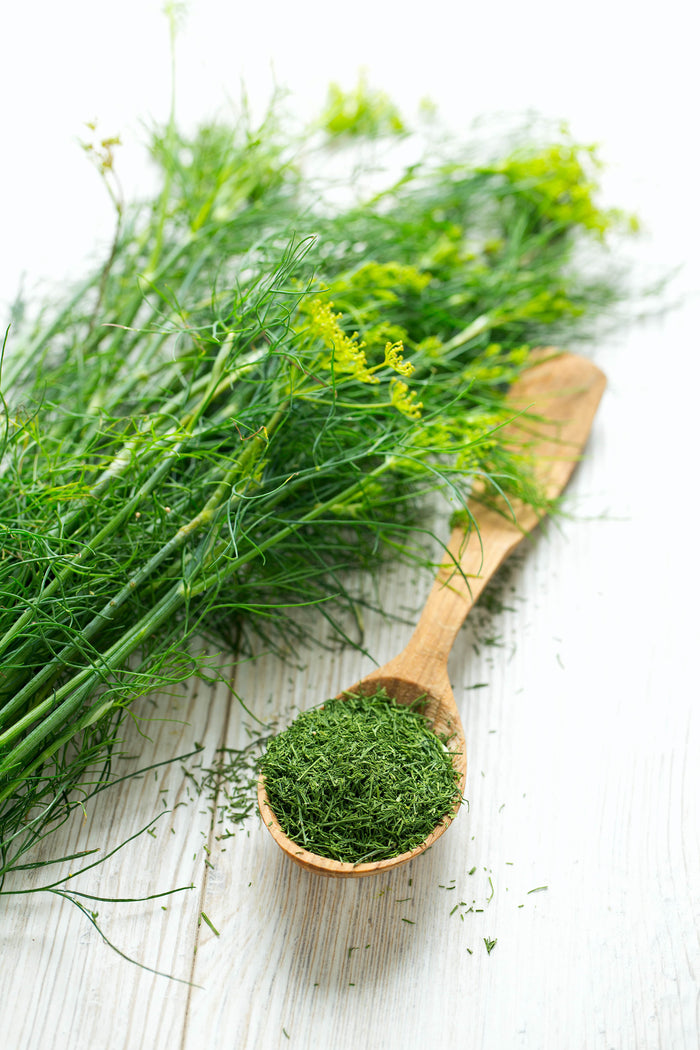
    Dehydrated dill

    Dill

    Feathery and aromatic; slightly earthier dried. Classic with fish, yogurt and potatoes.

    Drying
    4–6 h
    Temp
    95–104 °F
    Key compounds
    Antioxidants · vitamin C · manganese
    Ways to use & full profile →

    Ways to use

    • Mix into yogurt dips and tzatziki.
    • Sprinkle over salmon before baking.
    • Add to creamy pasta sauces.
    • Stir through potato salad or egg salad.
    • Combine with garlic powder and sea salt to create a savory seasoning.
    • Blend into herb butter for vegetables or fish.

    Tip: Dill is best stored whole and crushed just before use to retain as much aroma as possible.

    Dill is light, feathery, and highly aromatic, yet it is also one of the first herbs to deteriorate once refrigerated. In cooler parts of the country, dill grows well through spring and early summer, often producing generous bunches in a short period. Dehydrating dill helps lock in its flavor, so it’s available whenever needed, particularly outside peak season.

    When dried properly, dill maintains much of its distinctive aroma. However, the flavor becomes slightly more concentrated and a little more earthy, still pairing beautifully with fish, yogurt-based dips, and potatoes.

    Rich in antioxidants and with small amounts of vitamin C, manganese, and iron, dill has traditionally been associated with supporting digestive health and reducing bloating. Its gentle flavor makes it suitable for regular use rather than occasional garnish.

    Read the full leafy herbs introduction →

    Leafy culinary herbs are among the most frequently used ingredients in kitchens across the United States — and, unfortunately, among the most frequently wasted. From spring through late summer, farmers markets and home gardens can be abundant with basil, parsley, cilantro, and dill, and often growing faster than they can be used. Outside of peak growing months, however, fresh herbs can be more expensive and less fragrant. You buy a bunch for one recipe, use a handful, and the rest sits in the fridge until it’s soft, discolored, and destined for the trash or compost bin.

    Dehydrating leafy herbs is one of the simplest ways to preserve their flavor, extend their shelf life, and get full value from what you grow or purchase. You might have an herb garden at home, pick up bunches weekly at your local farmers market or grocery store, or use herbs in a commercial kitchen; drying them lets you keep that flavor on hand year-round.

    For businesses — cafés, restaurants, food producers, or caterers — dehydrating leafy herbs can also mean greater consistency and lower ingredient waste. Instead of reordering fresh herbs multiple times a week and throwing away unused portions, you can preserve surplus stock and use it gradually in blends, sauces, rubs, and prepared foods.

    Fresh leafy herbs are mostly water, so a bunch shrinks to a small amount once dried. Drying your own makes most sense with herbs you grow, garden surplus or bulk buys in season, rather than small grocery store bunches. For businesses using herbs in volume, buying in bulk at the height of the season is where the savings are, along with less waste.

    Beyond cost, dehydrating leafy herbs also concentrates their flavor, and because the water content is removed during the drying process, the natural oils and aromatic compounds become more pronounced. That means a pinch of dried herb can deliver depth and aroma without the need for a constant supply of fresh herbs.

    Leafy herbs are generally soft-stemmed and higher in moisture than woody herbs, which means they dry relatively quickly when sliced or separated properly. When dehydrated at lower temperatures, they retain their color and aroma beautifully. Once fully dried — when the leaves crumble easily between your fingers — they can be stored whole, crushed into flakes, or ground into powders depending on how you intend to use them.

    From everyday home cooking to commercial seasoning blends, dried leafy herbs are a practical, cost-effective, and versatile pantry essential.

    Below are some of the most popular culinary leafy herbs to dehydrate, along with their benefits, flavor profiles, and best uses.

    Dehydrated woody & hardy culinary herbs

    Firm stems, thick leaves and naturally low moisture — woody herbs are made for drying. Rich in essential oils, many are more aromatic dried than fresh.

    Buy dried vs dry your own

    Dehydrated woody & hardy culinary herbs: store prices for dried herbs compared with fresh (examples; check your own store)
    HerbPre-packed driedFresh @ US grocery store
    Rosemary$2.52 / 0.8 oz jar$1.78 / pack (approx 0.5 oz)
    Thyme$1.87 / 0.75 oz jar$1.78 / pack (approx 0.5 oz)
    Oregano$1.08 / 0.87 oz jar$1.78 / pack (approx 0.5 oz)

    At a glance

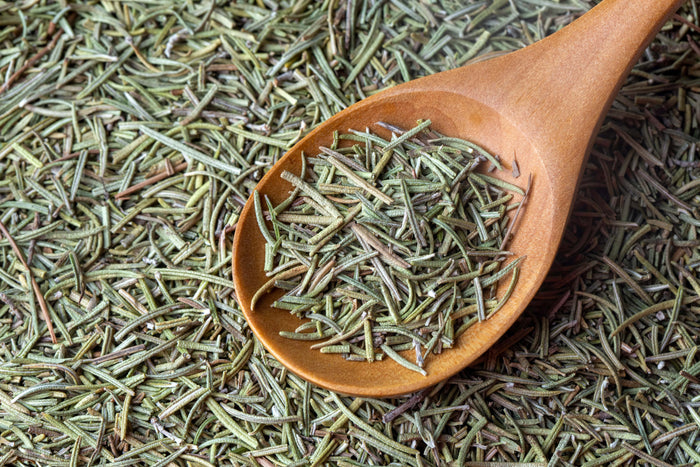
      Dehydrated rosemary

      Rosemary

      Intense, piney and bold — many cooks prefer it dried for slow-cooked dishes.

      Drying
      6–8 h
      Temp
      104–113 °F
      Key compounds
      Rosmarinic & carnosic acid
      Ways to use & full profile →

      Ways to use

      • Crush and sprinkle over roasted potatoes, carrots, or pumpkin.
      • Add to lamb, beef, or slow-roasted chicken.
      • Stir into olive oil for dipping bread, made fresh for the table.
      • Grind into a powder and mix into meat rubs.
      • Combine with sea salt to create rosemary-infused salt.
      • Stir into focaccia or savory bread dough.

      Tip: Because rosemary needles can be firm even when dried, many people prefer to crush or lightly grind them before adding to smoother dishes.

      If there’s one herb that was almost made for dehydration, it’s rosemary. Tough, fragrant, and naturally oil-rich, rosemary holds its own once dried, and, in fact, many cooks actually prefer dried rosemary for slow-cooked dishes because the flavor becomes deeper and more rounded over time.

      Fresh rosemary can last a little longer in the fridge than leafy herbs, but it still loses its punch after a week or so. If you grow it at home, you’ll know how quickly a plant can get out of control — thick stems, woody branches, and more sprigs than you know what to do with. Dehydrating rosemary lets you preserve that peak flavor instead of trimming and tossing.

      Once dried, rosemary develops an intense piney aroma with earthy, slightly citrus undertones. It’s bold, so a little goes a long way.

      Rosemary contains antioxidants such as rosmarinic acid and carnosic acid, compounds associated with anti-inflammatory properties. Traditionally, rosemary has been linked to supporting memory, circulation, and immune health, and it also provides small amounts of iron, calcium, and vitamin B6.

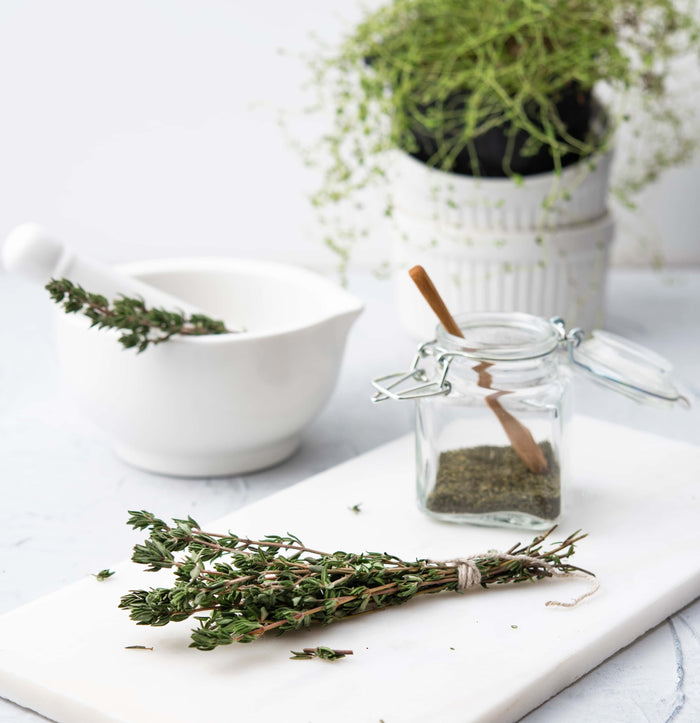
      Dehydrated thyme

      Thyme

      Tiny leaves, big flavor. Warmer and more aromatic dried; a French and Mediterranean staple.

      Drying
      5–7 h
      Temp
      104–113 °F
      Key compounds
      Thymol · vitamins A, C
      Ways to use & full profile →

      Ways to use

      • Add to soups, stews, and casseroles.
      • Stir into tomato sauces and gravies.
      • Mix into poultry seasoning blends.
      • Sprinkle over roasted vegetables before baking.
      • Combine with rosemary and oregano for a Mediterranean-style mix.
      • Crush lightly and add to slow-cooked beans or lentils.

      Tip: Thyme works especially well in long-cooked dishes, where it has time to soften and release its full flavor.

      Thyme might look delicate, but don’t let the tiny leaves fool you; it’s one of the most flavor-packed herbs in the kitchen, and when dried, that flavor becomes even more concentrated.

      Fresh thyme has a subtle minty-earthy quality, but once dehydrated, it becomes warmer and more aromatic. It’s one of those herbs that quietly enhances everything it touches, which is why it’s a staple in French and Mediterranean cooking.

      Containing thymol, a natural compound known for its antimicrobial properties, thyme also provides vitamin C, vitamin A, and small amounts of manganese and iron. Traditionally, thyme has been used to support respiratory health and digestion.

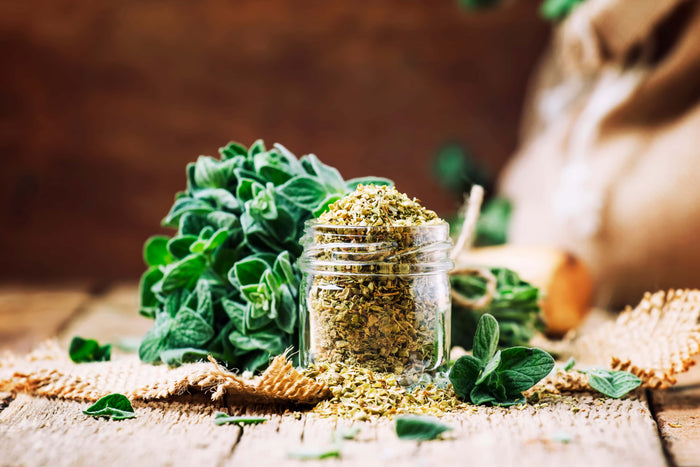
      Dehydrated oregano

      Oregano

      One of the few herbs many prefer dried — warmer, rounder and peppery. Holds up to heat.

      Drying
      5–7 h
      Temp
      104–113 °F
      Key compounds
      Carvacrol · thymol · vitamin K
      Ways to use & full profile →

      Ways to use

      • Sprinkle over pizza or flatbreads before baking.
      • Stir into tomato-based pasta sauces and casseroles.
      • Add to marinades for chicken, lamb, or grilled vegetables.
      • Blend into dry rubs and Mediterranean-style herb mixes.
      • Mix with olive oil and garlic for a dipping oil to use straight away.
      • Combine with chili flakes and sea salt for a finishing seasoning.

      Tip: Because dried oregano has a stronger flavor than fresh, it’s best used with a light hand at first — you can always add more, but you rarely need much. It’s one of those pantry herbs that quietly brings balance and depth to a dish without taking over.

      Oregano is a staple in Mediterranean cooking and one of the few herbs that many people actually prefer dried. While fresh oregano has a bright, slightly sharp flavor, dehydration brings out its warmer, more rounded side, with a soft, peppery edge, leaving an earthy depth that works beautifully in cooked dishes.

      If you grow oregano at home, you’ll know it’s not shy. It spreads quickly and produces abundantly, making it an ideal candidate for drying. Rather than trimming it back and losing half the plant, dehydrating allows you to preserve that flavor at its peak and use it gradually throughout the year.

      Once dried, oregano becomes fragrant and slightly crumbly, easy to crush between your fingers or grind into a finer texture if needed. It holds up well to heat, making it a reliable choice for sauces, roasts, and slow-cooked meals where more delicate herbs might fade.

      Rich in antioxidants and containing naturally occurring compounds such as carvacrol and thymol, which are associated with antimicrobial and anti-inflammatory properties, oregano also offers small amounts of vitamin K, iron, and manganese. Its plant-based compounds are known to support overall health when used regularly in meals.

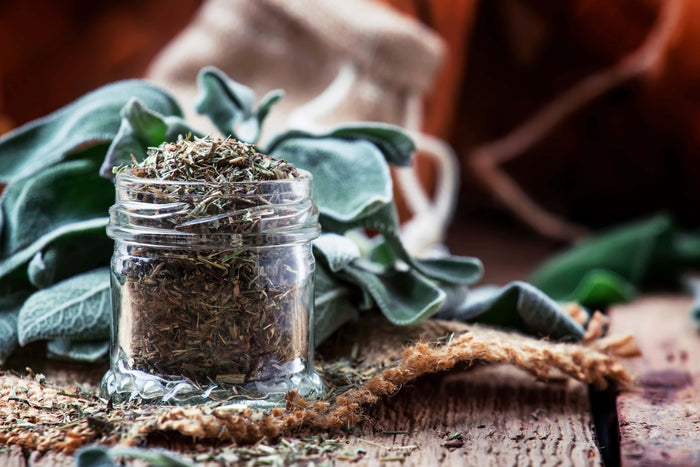
      Dehydrated sage

      Sage

      Earthy, peppery and savory. Crisp and slightly mellower once dried.

      Drying
      6–8 h
      Temp
      104–113 °F
      Key compounds
      Antioxidants · vitamin K
      Ways to use & full profile →

      Ways to use

      • Add to stuffing and roasted poultry dishes.
      • Mix into sausage seasoning and meat blends.
      • Stir through brown butter sauces for pasta or gnocchi.
      • Sprinkle over roasted pumpkin, squash, or sweet potato.
      • Combine with thyme and rosemary for classic herb blends.
      • Grind into a fine powder for savory rubs.

      Tip: Sage is bold, and a small amount is usually all you need to bring warmth and balance to a dish.

      Sage has a distinctive flavor, one that’s earthy, slightly peppery, and deeply savory. It’s the kind of herb that instantly makes you think of roasted poultry and stuffing, but it’s far more versatile than that.

      Fresh sage leaves are soft and slightly fuzzy, but once dehydrated, they become crisp and aromatic. When dehydrated, sage becomes slightly more mellow, but still retains its aromatic character, pairing beautifully with butter, root vegetables, and slow-cooked meats.

      If you grow sage at home, you’ll likely find you have more than you can use fresh. Dehydrating lets you preserve those leaves at their peak rather than letting them toughen on the plant or go unused in the fridge.

      Rich in antioxidants and traditionally associated with supporting cognitive function and digestion, sage also provides vitamin K and small amounts of magnesium and iron. Like many herbs, it contributes subtle nutritional benefits alongside its flavor.

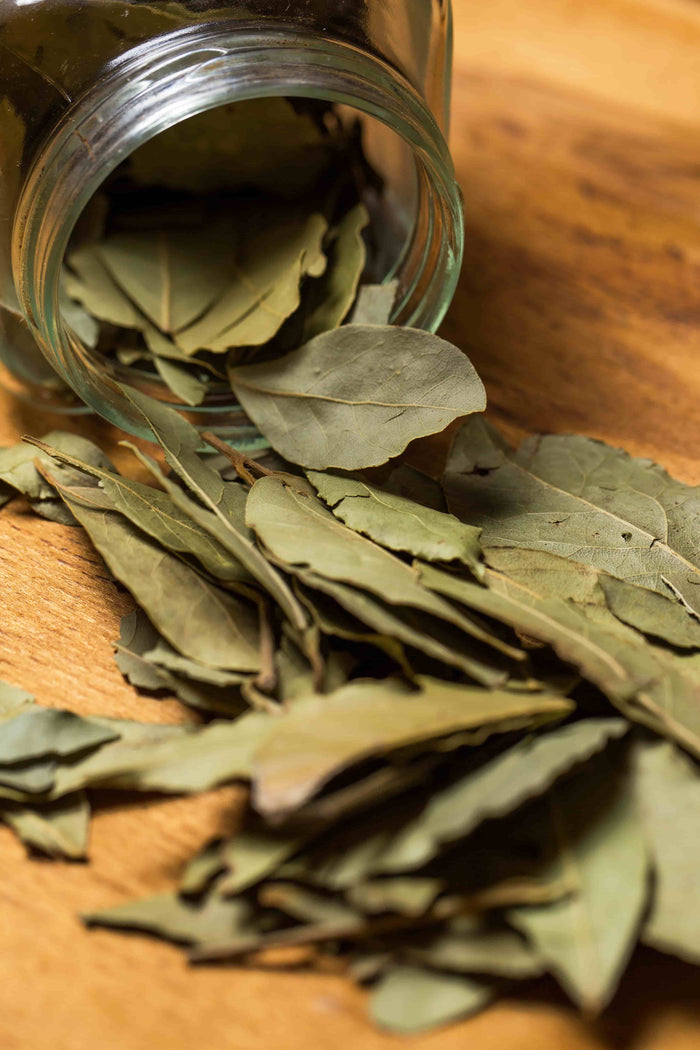
      Dehydrated bay leaves

      Bay leaves

      Traditionally used dried anyway. Adds quiet background depth to stocks and braises.

      Drying
      6–8 h
      Temp
      104–113 °F
      Key compounds
      Essential oils
      Ways to use & full profile →

      Ways to use

      • Add whole to soups, stews, and braised dishes.
      • Include in homemade stocks and broths.
      • Use in slow-cooked tomato sauces.
      • Add to pickling mixtures and brines.
      • Tie into bouquet garni bundles for roasts or stews.

      Tip: For restaurants, caterers, and food producers making stock in volume, dried bay leaves provide consistent, dependable flavor without the need for a constant fresh supply.

      Bay leaves are often overlooked because they’re rarely eaten directly, but they play an important supporting role in countless recipes. They add subtle depth rather than obvious flavor — the kind that rounds out a dish quietly in the background — and you’ll notice the difference in flavor when they’re not added to your cooking.

      When dehydrated, bay leaves become firm and brittle, with their herbal aroma slightly intensified. Because they’re traditionally used dried, even in commercial kitchens, dehydration is simply a way to preserve them in the form they’re most often used.

      Bay leaves contain natural essential oils that release gradually during cooking, and they have long been associated with supporting digestion, reducing inflammation, and boosting immunity. However, their primary role is flavor development rather than nutritional impact.

      Other woody herbs to try

      The herbs listed above are the most commonly used in everyday cooking, but they’re certainly not the only woody varieties suited to dehydration. Many hardy Mediterranean herbs respond exceptionally well to low-temperature drying and can be stored for months without losing their intensity.

      • Savory
      • Hyssop
      • Winter thyme
      • Lemon thyme
      • Curry leaf
      • Juniper berries (common juniper)
      Read the full woody herbs introduction →

      Across the United States, woody herbs such as rosemary, thyme, and oregano thrive in many warm, dry regions, while also growing successfully in home gardens throughout spring and summer in cooler climates. They’re often abundant during the growing season, filling garden beds and market stalls with fragrant, hardy sprigs that can easily outpace immediate kitchen use.

      If leafy herbs are the delicate overachievers of the kitchen, woody herbs are their tougher, more resilient cousins. With firmer stems, thicker leaves, and naturally lower moisture content, woody herbs are particularly well suited to dehydration. In fact, many of them were traditionally preserved this way long before modern refrigeration existed.

      Herbs like rosemary, thyme, and oregano actually thrive when dried. Because they’re naturally rich in essential oils, their flavor intensifies as moisture is removed, which is why dried woody herbs are often even more aromatic than when they’re fresh.

      From a practical standpoint, these herbs also tend to last longer fresh than leafy varieties, but they still lose potency over time; therefore, drying them ensures you capture peak flavor and preserve it for months.

      For home cooks, dehydrating woody herbs means you always have reliable seasoning on hand without constantly replacing small grocery store jars. For commercial kitchens, caterers, and food producers, it means consistent flavor in rubs, marinades, prepared foods, and packaged seasoning blends. See below for a cost comparison of purchasing fresh vs pre-dried.

      Woody herbs lose most of their weight as water when they dry, so a single bunch makes far less than a retail jar. The savings come from your own plants, garden surplus and bulk seasonal buys, especially for businesses that use herbs in volume.

      Unlike leafy herbs, woody varieties require slightly different preparation. The leaves are usually stripped from thick stems before or after drying, depending on preference, and they can take a little longer to dry due to their denser structure. Still, once fully dehydrated, they become brittle and easy to crumble or grind.

      Let’s take a closer look at some of the most popular woody herbs for dehydration.

      Dehydrated medicinal & functional herbs

      Valued as much for their plant compounds as their flavor. Delicate leaves and flowers need gentle handling and low heat to protect oils and active compounds.

      Buy dried vs dry your own

      Dehydrated medicinal & functional herbs: store prices for dried herbs compared with fresh (examples; check your own store)
      HerbPre-packed driedFresh
      Chamomile$4.50 / 1.1 oz (30 g) pouch (flowers)$5.00 / approx 3.5 oz (100 g) (seasonal bulk)
      Peppermint$4.00 / 1.4 oz (40 g) pouch (leaf tea)$2.00 / bunch, approx 1.8 oz (50 g)
      Calendula$4.00 / 0.9 oz (25 g) pouch (petals)$5.00 / approx 2.8 oz (80 g) (seasonal harvest)

      At a glance

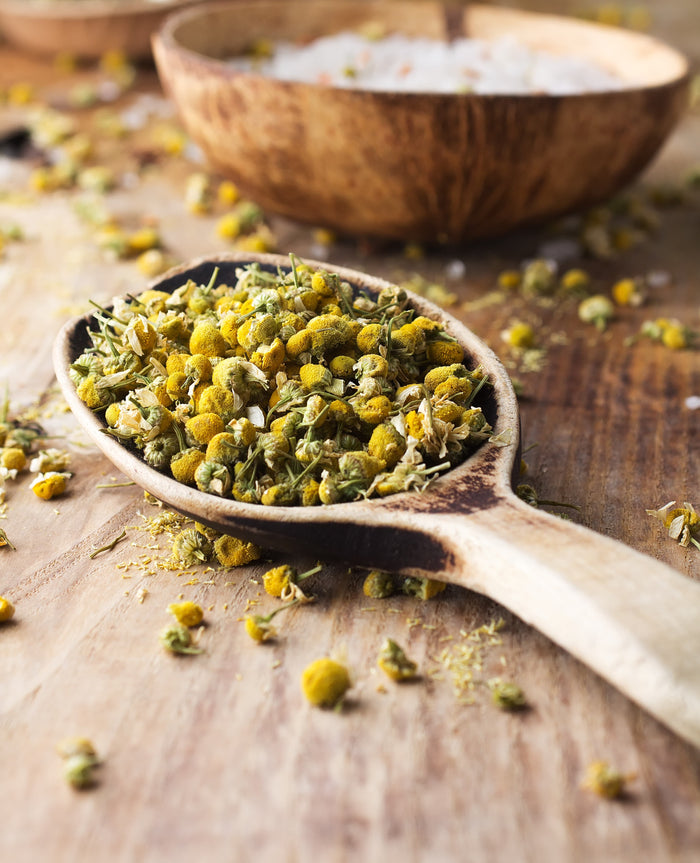
        Dehydrated chamomile

        Chamomile

        Delicate flowers that dry well if handled gently. The classic calming infusion.

        Drying
        4–6 h
        Temp
        95–104 °F
        Key compounds
        Apigenin
        Ways to use & full profile →

        Ways to use

        • Steep whole flowers in hot water for herbal tea.
        • Blend with peppermint or lemon balm for balanced infusions.
        • Include in evening tea blends.
        • Infuse into honey or syrups (honey is not for babies under 12 months).
        • Use in bath blends or small-batch botanical products.

        Tip: Because chamomile flowers are lightweight once dried, they should be stored whole in airtight containers and crushed only when brewing to retain maximum aroma.

        Chamomile is one of the most widely recognized functional herbs, traditionally dried and stored for year-round use. While the fresh flowers are delicate and short-lived once harvested, as they quickly lose their color and fragrance, they dehydrate particularly well if handled gently. Removing the moisture at low temperatures preserves their structure, while protecting the natural plant compounds responsible for their aroma and traditional uses.

        Chamomile has long been associated with relaxation and digestive comfort and contains naturally occurring antioxidants, such as apigenin. The European Medicines Agency’s herbal monograph lists its traditional use for minor stomach complaints such as bloating and minor spasms, and says people allergic to plants of the daisy family should not use it. [18] NIH’s NCCIH notes that allergy is more likely in people allergic to ragweed and related plants. [12]

        While chamomile is not a substitute for medical treatment, it remains one of the most commonly consumed herbal infusions for its gentle, soothing nature.

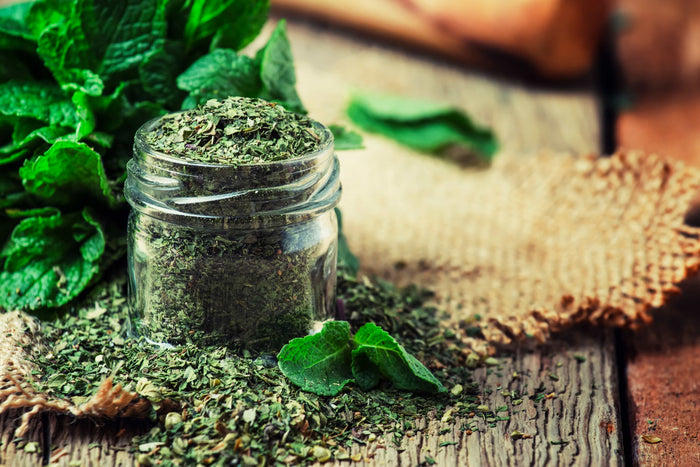
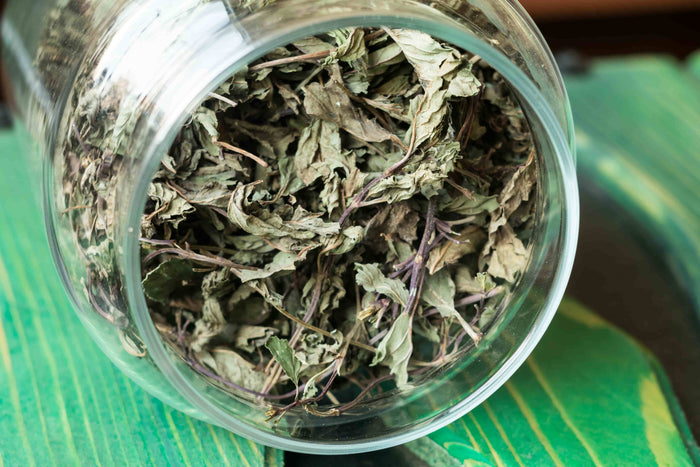
        Dehydrated peppermint

        Peppermint

        Clean, cooling and potent. Low heat preserves the menthol that defines it.

        Drying
        4–6 h
        Temp
        95–104 °F
        Key compounds
        Menthol
        Ways to use & full profile →

        Ways to use

        • Brew as a standalone herbal tea.
        • Blend with chamomile or lemon balm.
        • Add to iced tea or cold infusions.
        • Combine into digestive or seasonal tea blends.
        • Incorporate into small-batch herbal or bath products.
        • Use in marinades or as seasoning in Middle Eastern or lamb dishes.

        Tip: Because dried peppermint retains a strong aroma, it should be stored whole in airtight containers and crushed only when preparing infusions.

        Peppermint is one of the most reliable and widely used functional herbs, valued for both its flavor and its traditional role in herbal infusions. While the fresh leaves are vibrant and aromatic when first harvested, they deteriorate quickly, losing their potent oils, which directly affects both flavor and aroma, particularly in warmer climates where moisture loss and wilting occur within days.

        Drying at a controlled, low temperature helps preserve menthol and other naturally occurring essential oils that give it its familiar scent and clean, cooling, refreshing character. When properly dehydrated, the leaves remain fragrant, crumble easily, and retain their potency.

        Peppermint leaf is traditionally used to relieve indigestion and gas, according to the European Medicines Agency’s herbal monograph [19], and it is valued for its fresh, cooling flavor in teas and cooking.

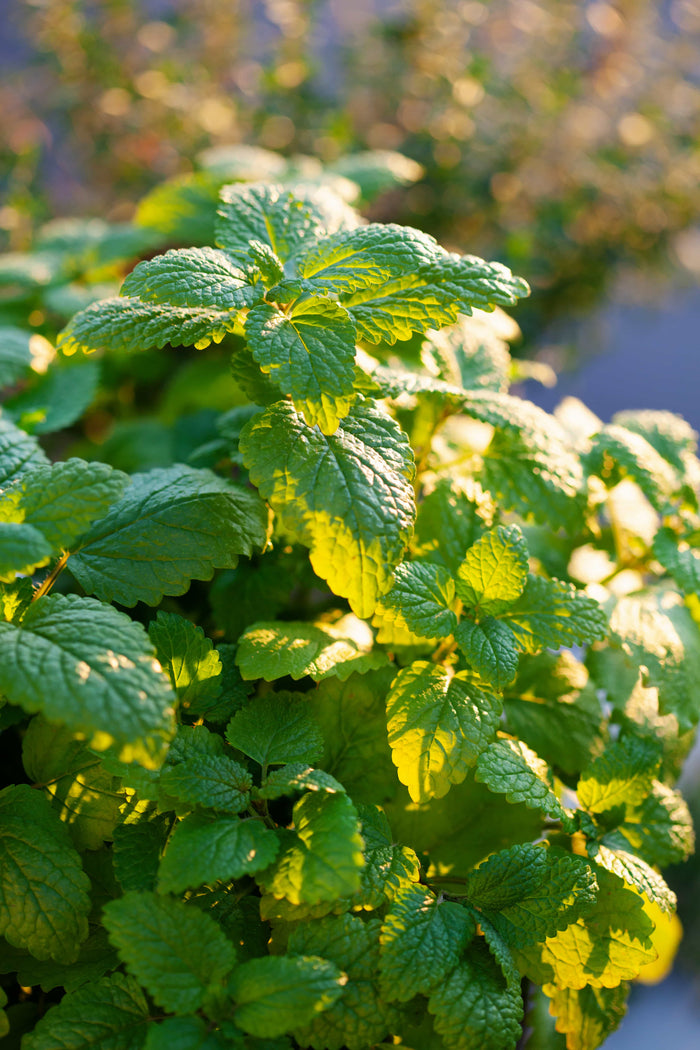
        Dehydrated lemon balm

        Lemon balm

        Softer than peppermint, with a light citrus note. Darkens fast — dry promptly.

        Drying
        4–6 h
        Temp
        95–104 °F
        Key compounds
        Rosmarinic acid · polyphenols
        Ways to use & full profile →

        Ways to use

        • Brew as a standalone herbal tea.
        • Blend with chamomile in evening infusions.
        • Add to iced teas for a subtle citrus note.
        • Mix into loose-leaf tea blends.
        • Infuse into syrups or honey (honey is not for babies under 12 months).

        Tip: To retain aroma and quality, dried lemon balm should be stored whole and protected from light and moisture.

        Lemon balm offers a softer, more delicate profile than peppermint, with a light citrus aroma and mild herbal flavor that lends itself well to calming infusions. It often produces more leaves than can be used fresh, making dehydration an efficient and practical preservation method.

        Once harvested, lemon balm leaves quickly lose their fragrance and begin to darken, particularly if exposed to excess heat or humidity. Drying at low temperatures helps preserve the plant’s natural oils and gentle lemon scent while maintaining leaf structure. When handled correctly, the dried leaves retain a light aroma and are suitable for both standalone teas and blended preparations.

        Containing naturally occurring compounds such as rosmarinic acid and various polyphenols, lemon balm is traditionally used to relieve mild symptoms of stress and to aid sleep, according to the European Medicines Agency’s herbal monograph. [20] It remains a popular ingredient in evening tea blends.

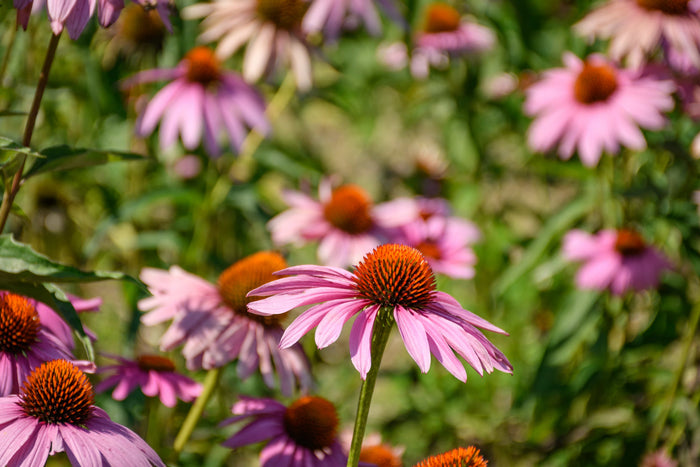
        Dehydrated echinacea

        Echinacea

        Leaves and flowers both dry well; petals keep their shape and the cone stays firm.

        Drying
        6–8 h
        Temp
        95–104 °F
        Key compounds
        Alkamides · polysaccharides
        Ways to use & full profile →

        Ways to use

        • Brew as part of a blended herbal infusion.
        • Combine with peppermint or lemon balm in seasonal teas.
        • Include in winter wellness formulations.
        • Incorporate into small-batch herbal preparations.

        Tip: Store in airtight containers away from direct light to maintain quality.

        Echinacea is widely cultivated for use in seasonal herbal preparations, particularly during colder months, and both leaves and flowers can be successfully dehydrated, allowing the plant to be preserved well beyond its flowering period. When dried carefully, the petals retain their shape, and the central cone remains firm, making the herb suitable for storage and blending.

        Fresh echinacea flowers are short-lived once cut and, without preservation, have a usable period limited to a brief window, so removing moisture through dehydration helps to maintain the plant's structural integrity. Low-temperature drying is particularly important for protecting the naturally occurring compounds in leaves and petals.

        Echinacea contains alkamides, polysaccharides and other plant constituents traditionally associated with seasonal immune support, and it has long been included in winter herbal infusions. In the European Medicines Agency’s herbal monograph, its recognized use is for specific echinacea preparations taken short term for colds, not for home-dried tea, and it is not for people allergic to daisy-family plants. [21] NIH’s NCCIH adds that allergic reactions to echinacea may be severe. [13]

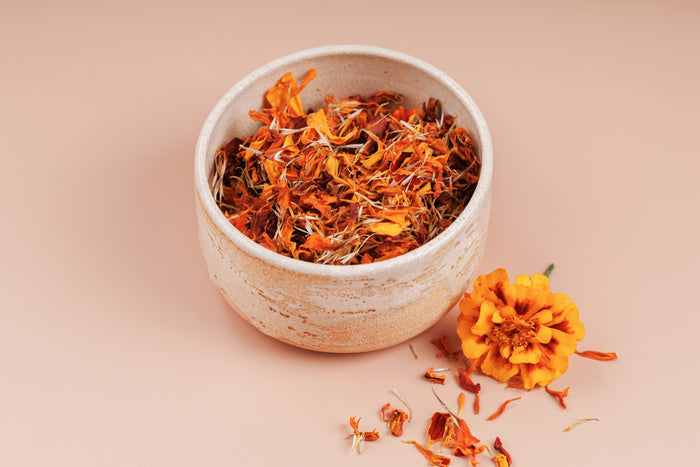
        Dehydrated calendula

        Calendula

        Bright petals that hold their color dried. Teas, infused oils and botanical blends.

        Drying
        4–6 h
        Temp
        95–104 °F
        Key compounds
        Flavonoids · carotenoids
        Ways to use & full profile →

        Ways to use

        • Add to loose-leaf tea blends.
        • Infuse into oils for use on the skin (not for eating).
        • Combine into bath blends.
        • Blend with chamomile and lemon balm.
        • Sprinkle lightly over salads (culinary-grade only).

        Tip: To preserve color and integrity, dried calendula petals should be stored whole in airtight containers and protected from moisture.

        Calendula flowers are valued for both their function and visual appeal, with bright orange and yellow petals that retain much of their color when dried properly. Although often grown ornamentally, calendula has long been harvested for topical and infused preparations, and dehydration is a reliable way to preserve the petals beyond their short blooming season.

        Fresh calendula petals begin to soften and fade quickly after harvesting, so gentle drying at low temperatures helps protect both color and the naturally occurring compounds found within the plant. Once dried, the petals remain lightweight and suitable for blending or infusing.

        Calendula contains flavonoids and carotenoids, plant compounds traditionally associated with supporting skin health. The petals are often infused into oils for use on the skin, and they are also included in herbal teas and botanical blends for their mild flavor and visual distinction.

        Other medicinal herbs to try

        The herbs above represent some of the most widely used functional and medicinal botanicals, but they’re only a starting point. Many traditional herbs used in infusions and seasonal blends can be successfully dehydrated when handled carefully.

        • Nettle leaf
        • Elderflower
        • Yarrow
        • Raspberry leaf
        • Hibiscus
        • Marshmallow leaf
        Read the full medicinal herbs introduction →

        Across the United States, medicinal and functional herbs are commonly dried and stored for use in traditional infusions, teas, botanical blends, and seasonal preparations. Picture chamomile fields in late summer, and peppermint and lemon balm flourishing in home gardens; many of these herbs grow abundantly for a short window each year, making preservation essential if they are to be used beyond harvest.

        Unlike purely culinary herbs, medicinal and functional varieties are often valued as much for their plant compounds as for their flavor. Their delicate leaves and flowers can deteriorate quickly once picked, losing color, aroma, and potency if not handled correctly. Dehydration allows you to preserve these herbs at their peak, stabilizing them for long-term use while protecting their natural properties.

        For home users, drying medicinal and functional herbs means you can harvest in bulk during the flowering season and rely less on packaged tea bags or imported blends. For tea blenders, herbalists, cafes, and wellness brands, it provides greater control over quality, sourcing, and consistency, as well as a stable, dependable ingredient that blends well and stores easily without losing strength.

        Fresh herbs are mostly water, so drying your own pays off most with flowers and leaves you grow or buy in bulk in season, rather than small retail bunches. Here is how store prices compare (example prices; check your own store).

        Medicinal and functional herbs require gentle handling and low-temperature drying to protect their strong oils and active compounds. When dried correctly, they retain both their visual appeal and their characteristic aroma, making them suitable for infusions, blends, and further processing.

        Let’s explore some of the most popular medicinal and functional herbs to dehydrate.

        Aromatic & infusion herbs

        Chosen as much for fragrance as flavor. Their essential oils fade fast after harvest, so controlled low-temperature drying is what keeps color and scent.

        Buy dried vs dry your own

        Aromatic & infusion herbs: store prices for dried herbs compared with fresh (examples; check your own store)
        HerbPre-packed driedFresh
        Lavender$6.00 / 0.9 oz (25 g) pouch (loose-leaf)$7.00 / bunch, approx 2.1 oz (60 g) (seasonal market)
        Lemon verbena$7.00 / 0.9 oz (25 g) pouch (loose-leaf)$4.00 / bunch, approx 1.8 oz (50 g)
        Rose petals$7.00 / 0.7 oz (20 g) pouch$8.00 / approx 2.8 oz (80 g) (culinary grade, seasonal)

        At a glance

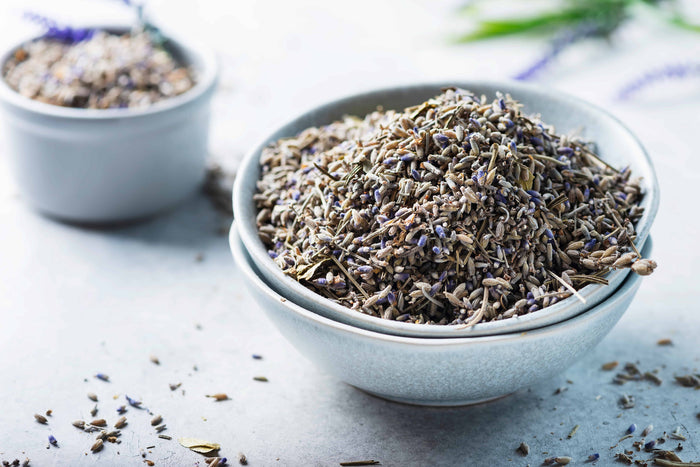
          Dehydrated lavender

          Lavender

          Culinary-grade buds keep color and oil at low heat — without turning bitter.

          Drying
          4–6 h
          Temp
          95–104 °F
          Key compounds
          Linalool · linalyl acetate
          Ways to use & full profile →

          Ways to use

          • Brew into herbal tea blends.
          • Infuse into syrups for desserts or beverages.
          • Add to shortbread, cakes, or cookies.
          • Blend into sugar for baking.
          • Incorporate into bath blends or sachets.

          Tip: Lavender should be stored whole in airtight containers away from light to protect its essential oils and prevent flavor deterioration.

          Lavender is instantly recognizable for its fragrance, but culinary-grade lavender also carries a delicate floral flavor that can be used in both sweet and savory preparations. While fresh lavender flowers are vibrant and aromatic, they deteriorate quickly after cutting, making dehydration essential for preserving their quality.

          When dried at low temperatures, lavender buds retain much of their color and essential oil, and proper dehydration prevents browning and helps maintain the herb’s distinctive aroma without intensifying bitterness. Because lavender is potent, careful drying helps preserve balance rather than overpowering flavor.

          Lavender contains naturally occurring compounds such as linalool and linalyl acetate, which contribute to its calming aroma and traditional association with relaxation. While most commonly used in fragrance applications, lavender has long been incorporated into baking and tea blends.

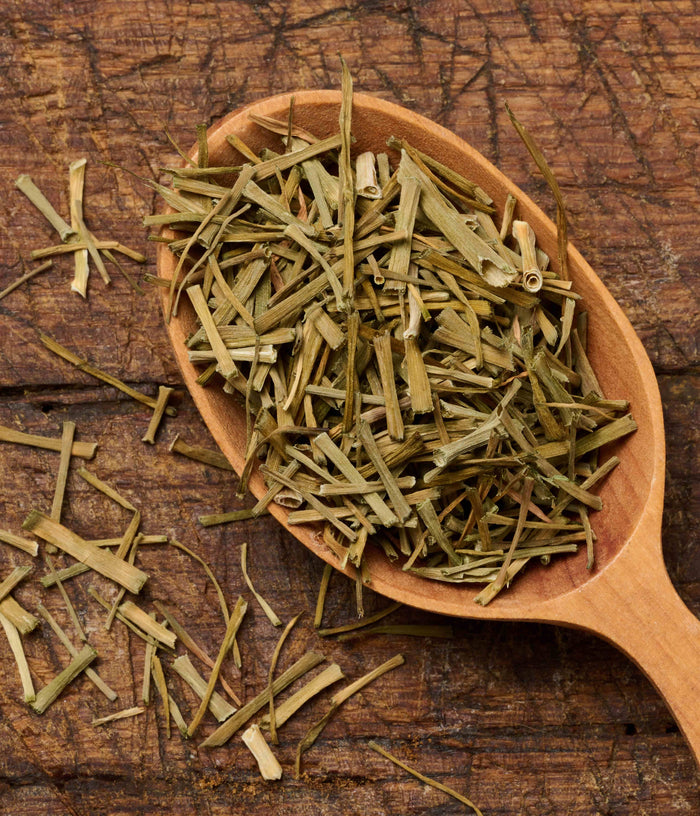
          Dehydrated lemongrass

          Lemongrass

          Fibrous stalks — slice before drying and run a little hotter than leafy herbs.

          Drying
          6–8 h
          Temp
          113–122 °F
          Key compounds
          Citral
          Ways to use & full profile →

          Ways to use

          • Brew into herbal teas.
          • Add to soups and broths.
          • Blend into spice mixes.
          • Infuse into syrups or cordials.
          • Combine with ginger in tea blends.
          • Incorporate into Asian cuisine, stir fries, or vodka cocktails.

          Tip: Store dried lemongrass in airtight containers and protect from moisture to preserve aroma.

          Lemongrass is known for its clean citrus aroma and bright flavor and is often used in both cooking and infusions. While fresh stalks are commonly available, they can dry out or lose fragrance quickly if not used promptly, so dehydration provides a practical way to preserve lemongrass for extended storage.

          Because of its fibrous structure, lemongrass should be sliced before drying to allow even moisture removal, and when dehydrated properly, it retains much of its citrus scent and can be rehydrated effectively during brewing or cooking.

          Traditionally used in herbal infusions and Asian cuisine for both flavor and digestive support, lemongrass contains citral and other naturally occurring aromatic compounds that give it its lemon profile.

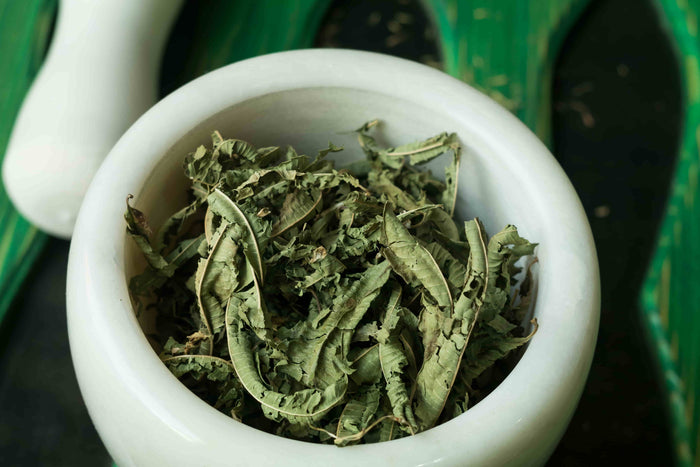
          Dehydrated lemon verbena

          Lemon verbena

          Among the most aromatic citrus herbs; its bright lemon scent holds remarkably well dried.

          Drying
          4–6 h
          Temp
          95–104 °F
          Key compounds
          Citral · verbascoside
          Ways to use & full profile →

          Ways to use

          • Brew as a standalone herbal tea.
          • Blend into loose-leaf infusions.
          • Infuse into syrups for desserts.
          • Add to custards or creams.
          • Toss into salads or various savory dishes.
          • Combine with chamomile or lemon balm.

          Tip: To maintain quality, store dried lemon verbena whole and protected from light and humidity.

          Lemon verbena is often considered one of the most aromatic citrus-scented herbs available. Its leaves release a bright, clean lemon fragrance when crushed, and this characteristic holds remarkably well when dehydrated correctly.

          Fresh lemon verbena leaves can lose potency quickly after harvesting, so drying at low temperatures helps preserve both the fragrance and the plant’s natural oils, resulting in an herb that remains vibrant in both scent and flavor.

          Commonly included in boutique tea blends for its refined citrus profile, lemon verbena contains naturally occurring compounds such as citral and verbascoside, which contribute to its traditional use in calming and digestive infusions. It’s also known to support the immune system, reduce stress, improve sleep quality, and aid muscle recovery post-exercise.

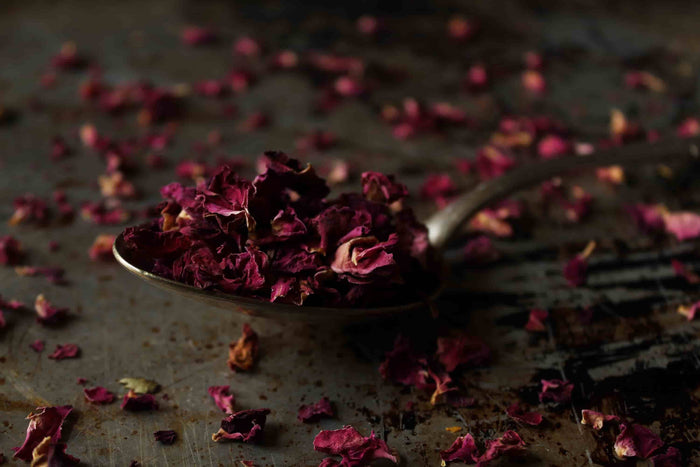
          Dehydrated rose petals

          Rose petals

          Highly perishable fresh. Low heat prevents browning and keeps the floral aroma.

          Drying
          4–6 h
          Temp
          95–104 °F
          Key compounds
          Aromatic oils
          Ways to use & full profile →

          Ways to use

          • Add to loose-leaf tea blends.
          • Infuse into syrups.
          • Incorporate into desserts.
          • Blend into sugar for baking.
          • Use in bath blends or botanical products.

          Tip: Store petals carefully in airtight containers to preserve both color and aroma.

          Used in both cooking and aromatic preparations, fresh rose petals are delicate and highly perishable, with dehydration allowing their fragrance and color to be preserved safely for extended use.

          Low-temperature dehydration is essential to prevent browning and loss of fragrance, and when dried properly, they can retain much of their visual appeal and subtle floral aroma.

          Rose petals contain naturally occurring aromatic compounds that have traditionally been associated with calming preparations, and in cooking, they add fragrance rather than strong flavor, making them suitable for light desserts and tea blends. Dehydrated rose petals are also traditionally associated with supporting digestion.

          Dehydrated spearmint

          Spearmint

          Softer and sweeter than peppermint — suited to cooking as well as teas.

          Drying
          4–6 h
          Temp
          95–104 °F
          Key compounds
          Carvone
          Ways to use & full profile →

          Ways to use

          • Brew as herbal tea.
          • Add to yogurt sauces.
          • Blend into spice mixes.
          • Sprinkle over salads or grains.
          • Combine with lemon balm in infusions.
          • Create skincare or bath products.

          Tip: Store whole leaves in airtight containers and crumble only when required.

          Spearmint offers a softer, sweeter profile than peppermint, making it particularly suited to cooking and teas. Although fresh spearmint leaves deteriorate quickly after harvesting, dehydration helps preserve their mild mint aroma while preventing spoilage when handled properly.

          Containing carvone and other natural compounds that give it a sweeter mint flavor, spearmint is traditionally used in both herbal teas and Mediterranean cooking. It’s a versatile herb traditionally associated with aiding digestion and relaxation.

          Other aromatic herbs to try

          Aromatic herbs offer enormous versatility across teas, desserts, syrups, and botanical preparations, and once you become familiar with drying temperatures and preserving essential oils, you’ll find there are many more fragrant options available.

          • Bergamot leaf
          • Pine needles (food grade)
          • Lime leaf
          • Sage flowers
          • Anise hyssop
          • Apple mint
          Read the full aromatic herbs introduction →

          Across the United States, aromatic herbs are widely used in tea culture, baking, botanical beverages, and household preparations, with lavender and fragrant lemon verbena grown in home gardens and by specialty producers. These herbs are often abundant for a short period and then suddenly gone, making preservation essential if you want to use them beyond their peak season.

          Aromatic herbs are often chosen as much for their fragrance as for their flavor, and whether infused into teas, syrups, desserts, or botanical products, they rely on their essential oils to deliver both scent and taste. Once harvested, those oils begin to dissipate quickly, particularly if the leaves or flowers are exposed to light, heat, or excess moisture, so dehydration helps preserve that aromatic profile while significantly extending shelf life.

          Unlike woody culinary herbs, many aromatic varieties are more delicate in structure. Flowers and soft leaves require controlled, low-temperature drying to maintain both color and fragrance, and, when handled properly, they retain their defining characteristics and remain suitable for use in both cooking and infusion applications.

          For home growers, drying aromatic herbs means seasonal harvests can be stored and enjoyed gradually rather than used all at once. For cafés, bakeries, tea blenders, and specialty producers, dehydration provides a stable and consistent ingredient that performs reliably in blends and formulations. As with other herb categories, drying your own pays off most with herbs you grow or buy in bulk in season.

          Below are some of the most commonly dehydrated aromatic and infusion herbs, along with how they’re typically used.

          Dehydrated root & rhizome herbs

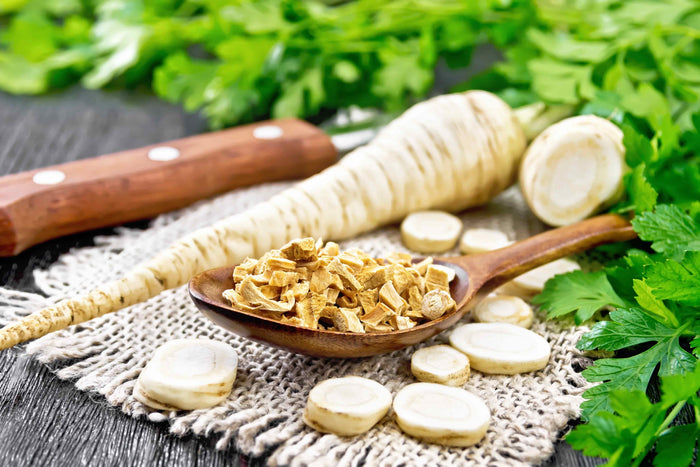
          Dense, fibrous and lower in moisture than soft herbs. Slice evenly at 2–4 mm and they dry into a shelf-stable ingredient you can use whole, sliced or ground.

          Buy dried vs dry your own

          Dehydrated root & rhizome herbs: store prices for dried herbs compared with fresh (examples; check your own store)
          RootPre-packed driedFresh / raw
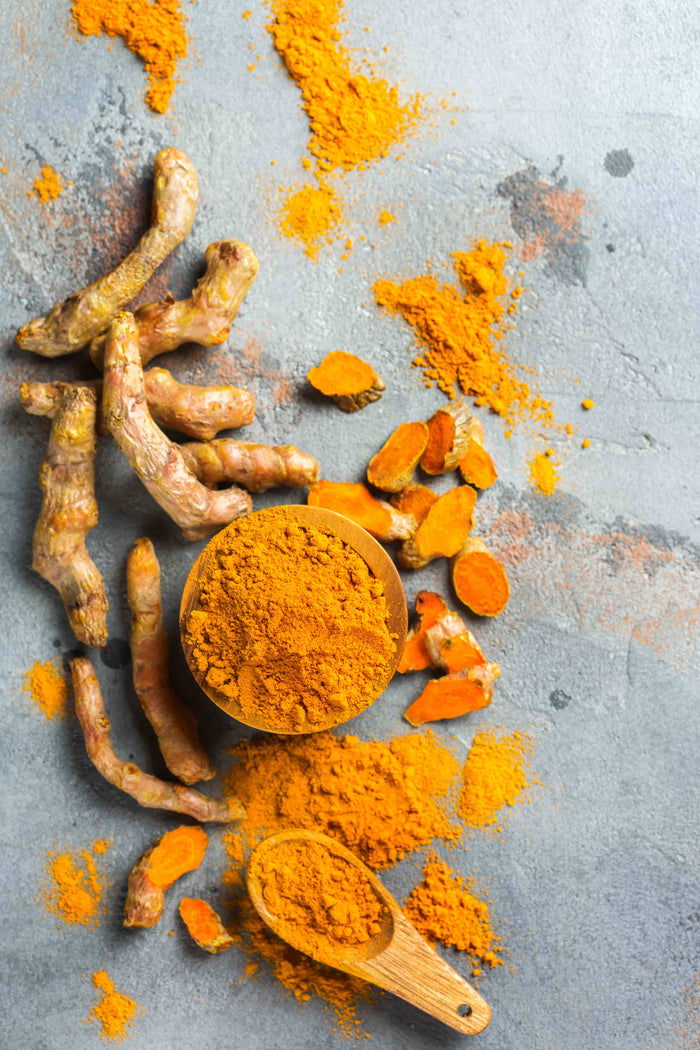
          Turmeric$6.00 / 3.5 oz (100 g) pouch (organic powder)$8.00 / 2.2 lb (1 kg) (fresh root)
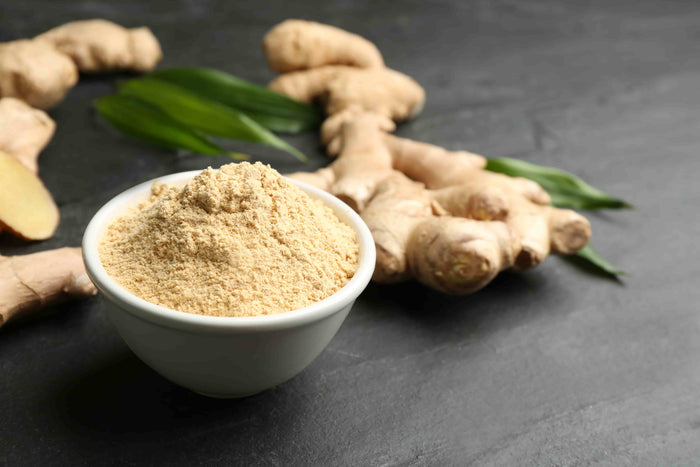
          Ginger$2.32 / 2.8 oz (80 g) jar (ground)$4.02 / 2.2 lb (1 kg) (fresh root)
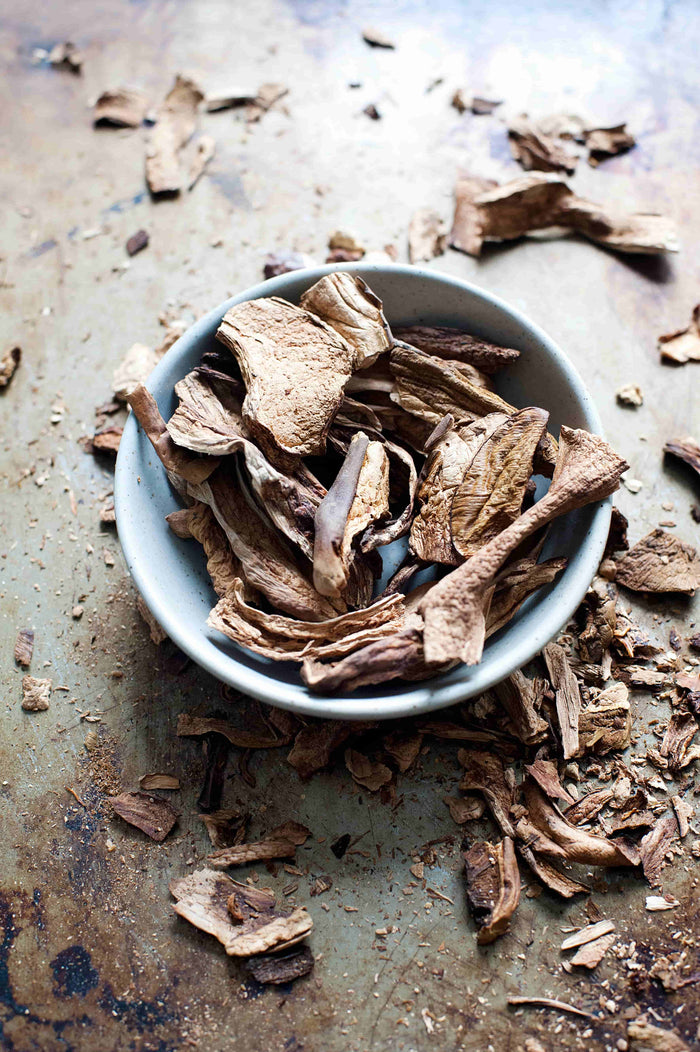
          Licorice root$8.00 / 3.5 oz (100 g) pouch (tea)$18.00 / 2.2 lb (1 kg) (whole, bulk raw)

          At a glance

            Dehydrated ginger root

            Ginger root

            Slice before drying for even results. Store whole, chipped or ground.

            Drying
            8–12 h
            Temp
            122–131 °F
            Key compounds
            Gingerol · shogaol
            Ways to use & full profile →

            Ways to use

            • Grind into powder for baking.
            • Brew into herbal infusions.
            • Add to spice blends, marinades, or sauces.
            • Incorporate into smoothies or even cocktails.
            • Combine with lemongrass in tea blends.
            • Add to savory dishes, including curries, soups, and stir-fries.

            Tip: Store in airtight containers and grind only as required to maintain potency.

            Ginger is one of the most widely used rhizomes in both cooking and functional applications, and while fresh ginger has a bright, spicy warmth, dehydration intensifies its flavor slightly while allowing it to be stored long-term without spoilage.

            Fresh ginger root begins to lose moisture and firmness soon after harvest, and once cut, it can deteriorate quickly. Slicing before drying ensures even dehydration and helps preserve the naturally occurring compounds within the root. When properly dried, ginger retains much of its aroma and can be stored whole, chipped, or ground into powder.

            Commonly used in teas, baked goods, and savory dishes for both flavor and functional value, ginger root contains gingerol and shogaol, compounds responsible for its characteristic heat. The European Medicines Agency’s herbal monograph lists its traditional use for motion sickness and mild digestive complaints. [22]

            Dehydrated turmeric root

            Turmeric root

            Keeps its deep orange color when sliced and dried. Grind or infuse.

            Drying
            8–12 h
            Temp
            122–131 °F
            Key compounds
            Curcumin
            Ways to use & full profile →

            Ways to use

            • Grind into powder for marinades and sauces.
            • Brew into herbal teas.
            • Blend into spice mixes.
            • Add to smoothies, soups, and curries.
            • Combine with ginger in functional blends.

            Tip: Store whole or powdered turmeric away from light to preserve color and quality.

            Turmeric root is a popular herb for both its vibrant color and its long-standing role in traditional preparations, and although fresh turmeric is increasingly available, it stains easily and can deteriorate if not used quickly. Dehydration transforms the root into a stable, highly versatile ingredient.

            When sliced and dried at controlled temperatures, turmeric retains its deep orange color and many of its naturally occurring compounds, and once fully dehydrated, it can be ground into powder or used in sliced form for infusions.

            Turmeric is famous for being rich in curcumin, the compound responsible for its color and traditionally associated with its potent anti-inflammatory and antioxidant properties. It’s widely used in both cooking and functional blends and offers an array of benefits, including supporting joint health, improving digestion, and boosting immunity. It also may help improve both heart and brain health.

            Dehydrated licorice root

            Licorice root

            Naturally sweet and earthy; sliced root becomes firm and shelf-stable. Not for everyone — read the cautions.

            Drying
            10–14 h
            Temp
            113–122 °F
            Key compounds
            Glycyrrhizin
            Ways to use & full profile →

            Ways to use

            • Brew into herbal infusions.
            • Blend into tea mixes.
            • Grind into powder for formulations.
            • Combine with ginger or peppermint.
            • Use in traditional herbal preparations.

            Tip: Store in airtight containers and protect from humidity to preserve quality.

            Licorice root has been used traditionally for both flavoring and herbal preparations, and unlike leafy herbs, it is dense and fibrous, making dehydration particularly suitable for long-term storage. The naturally sweet, slightly earthy flavor develops gradually when brewed, adding depth and roundness rather than sharp intensity.

            Fresh or raw licorice root must be sliced before drying to ensure moisture is removed evenly, and once dehydrated, the root becomes firm and shelf-stable, suitable for brewing whole or grinding into smaller pieces. Drying preserves the compounds responsible for its sweetness while allowing the root to be stored for extended periods without deterioration.

            Containing glycyrrhizin, the naturally occurring compound responsible for its distinctive sweetness, licorice root is traditionally used for digestive discomfort and as an expectorant for coughs with colds, according to the European Medicines Agency’s herbal monograph. [23] It is not for everyone: the same monograph says not to use licorice root for more than 4 weeks, not during pregnancy, and not with high blood pressure, kidney, liver or heart disease or low potassium, or with diuretics, heart medicines (cardiac glycosides), corticosteroids or stimulant laxatives. [23] NIH’s NCCIH notes that even small amounts of glycyrrhizin from licorice root products have been linked to severe adverse effects. [11]

            Dehydrated galangal

            Galangal

            Like ginger but sharper, with citrus notes. Thin slices keep their fragrance.

            Drying
            8–12 h
            Temp
            122–131 °F
            Key compounds
            Antioxidants · essential oils
            Ways to use & full profile →

            Ways to use

            • Add to soups and broths.
            • Grind into spice blends.
            • Brew into herbal infusions.
            • Incorporate into marinades.
            • Combine with lemongrass and ginger.
            • Use in curries and various Asian dishes.

            Tip: Store sliced pieces in airtight containers to preserve aroma.

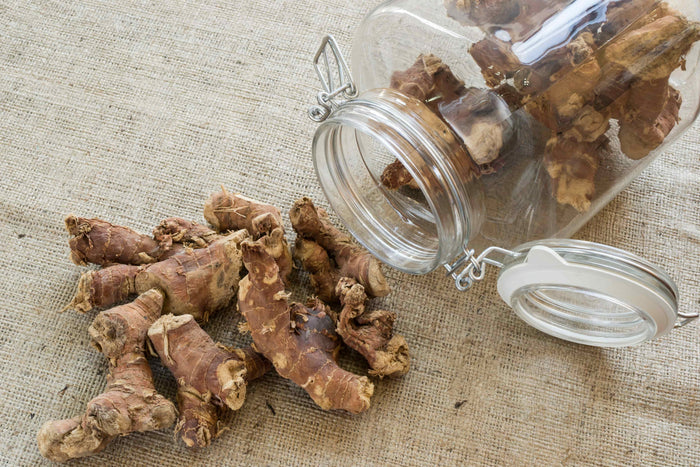
            Commonly used in Southeast Asian cuisine, galangal is similar to ginger, although its flavor is noticeably sharper with bright citrus notes and a subtle peppery warmth. It also brings a clean, aromatic lift to broths, curries, and spice blends that is distinct from ginger’s deeper heat.

            Fresh galangal is firm and fibrous, making it difficult to store long-term, whereas dehydration removes excess moisture while preserving its essential oils and aromatic compounds, allowing you to gain benefits in both flavor intensity and functional properties. When thinly sliced and dehydrated, galangal retains much of its distinctive fragrance and can be stored for extended periods without losing character when dried correctly.

            Containing naturally occurring antioxidants and plant compounds associated with digestive support and overall vitality, galangal is primarily used for flavor in cooking, but it has also been used for centuries in herbal preparations. It also offers powerful antioxidant, anti-inflammatory, and antimicrobial properties, boosts the immune system, improves energy and cognitive function, and supports cardiovascular and joint health.

            Dehydrated horseradish

            Horseradish

            Sharp, pungent heat that reactivates when ground and rehydrated. A little goes far.

            Drying
            8–12 h
            Temp
            122–131 °F
            Key compounds
            Glucosinolates
            Ways to use & full profile →

            Ways to use

            • Grind into powder for seasoning.
            • Rehydrate for sauces.
            • Blend into spice mixes.
            • Add to marinades.
            • Incorporate into savory blends.

            Tip: Store in airtight containers away from moisture to preserve potency.

            Horseradish root is known for its sharp, pungent heat, which is released when the root is cut or grated, and it’s that immediate intensity that makes it so distinctive in sauces, condiments, and savory preparations. While fresh horseradish delivers powerful flavor, it can lose potency quickly once processed, particularly if exposed to air. Dehydration allows the root to be preserved in a stable form while retaining much of its flavor potential.

            When sliced and dried carefully, horseradish maintains its aromatic compounds, which can be reactivated when ground and rehydrated. The drying process concentrates the root, meaning a small amount can deliver significant heat and depth in spice blends or prepared sauces.

            Horseradish contains naturally occurring glucosinolates, the compounds responsible for its pungency, which have been associated with the respiratory and digestive systems, and fresh horseradish contains some vitamin C. This is one reason why horseradish has long been used not only for flavor but also in traditional preparations.

            Other roots & rhizomes to try

            Roots and rhizomes provide depth, warmth, and concentrated flavor, and they often respond particularly well to dehydration. Beyond the examples listed above, there are many other underground herbs worth considering, especially for tea blends and spice formulations.

            • Dandelion root
            • Burdock root
            • Angelica root
            • Orris root
            • Valerian root
            • Elecampane
            Read the full roots & rhizomes introduction →

            Across the United States, root and rhizome herbs are widely used for their warming flavors, particularly through the colder months when fresh leafy herbs may be less abundant. While some varieties are cultivated locally and others are imported, roots such as ginger, turmeric, and licorice have become staples in both culinary and medicinal preparations, especially during fall and winter.

            Unlike leafy or floral herbs, roots and rhizomes grow beneath the surface, storing concentrated nutrients and natural compounds within dense, fibrous structures. Because of their lower moisture content compared to soft herbs, they dehydrate particularly well, producing a shelf-stable ingredient that retains both flavor and functional properties when handled correctly.

            Fresh roots such as ginger or turmeric are readily available, but they can spoil quickly once cut, and whole roots can begin to soften or mold if not stored properly. Dehydration removes moisture while preserving the compounds responsible for both flavor and traditional health benefits, and once dried, these roots can be stored for extended periods and used whole, sliced, or ground into powder, depending on the application.

            Drying your own can also cost less, particularly with fresh ginger bought in bulk.

            Once dehydrated, fresh roots lose significant water weight, meaning a larger fresh batch can provide multiple jars or pouches of finished product. For those dehydrating at home, this provides better value and control over quality, and for food producers, tea blenders, and health-focused brands, processing fresh roots in-house reduces reliance on retail packaging and ensures consistency in flavor and potency.

            Below are some of the most commonly dehydrated root and rhizome herbs, along with their key features and uses.

            Choosing a machine

            Which dehydrator do you need for herbs?

            Herbs reward precise, low, even heat. Every BenchFoods unit holds a steady temperature from 59 °F with consistent airflow on every tray — plus an Ambient Air Mode (fans only, no heat) — in 304 food-grade stainless steel.

            Talk to a specialist →
            1 Zone / 10 Tray / 0.6 m² (6.5 sq ft)

            Home growers

            1 Zone / 10 Tray / 0.6 m² (6.5 sq ft)

            A season’s garden herbs in a few batches, with precise low-temperature control for leaves and flowers.

            $239$399

            View machine
            1 Zone / 16 Tray / 2.56 m² (27.6 sq ft)

            Cafés & tea blenders

            1 Zone / 16 Tray / 2.56 m² (27.6 sq ft)

            Bulk leafy herbs, flowers and sliced roots with even airflow across every tray. Ambient Air Mode for fan-only drying.

            $895$1,395

            View machine
            2 Zone / 28 Tray / 11.90 m² (128 sq ft)

            Growers & producers

            2 Zone / 28 Tray / 11.90 m² (128 sq ft)

            Two independent zones: delicate flowers at 95 °F in one, ginger and turmeric at 131 °F in the other.

            $5,995$8,995

            View machine

            Which herb type are you drying?

            Each herb type needs its own prep, heat and finish. Use this to set up a batch — or to plan two zones side by side.

            Each herb type: prep, temperature, drying time, done test and storage
            Herb typePrepTempTimeDone whenShelf life
            Leafy herbsRemove thick stems; leave leaves whole95–104 °F3–6 hLeaves crumble easilyUp to about 12 months
            Woody herbsDry on the stem or strip first104–113 °F5–8 hStems snap cleanlyUp to about 12 months
            Medicinal herbsDry flowers whole, handle gently95–104 °F4–8 hPetals papery, cone firmBest within 12 months
            Aromatic herbsDry whole; slice lemongrass95–122 °F4–8 hCrisp; stalks snapBest within 12 months
            Roots & rhizomesScrub, dry, slice 2–4 mm113–131 °F8–14 hFirm and brittle throughoutWhole pieces keep longest

            How to dehydrate herbs

            Preparation determines color, aroma and quality long before herbs reach the trays. Six steps, from harvest to jar.

            1. Harvest in the morning

              Pick once surface moisture has evaporated but before the heat of the day starts to wilt them. Choose leaves and flowers free from bruising or insect damage, fully developed but not past peak, and dry on the surface. Roots should be firm with no soft spots.

              • Morning harvest
              • No bruising
            2. Wash gently, then dry thoroughly

              Rinse in cool water to remove dirt and debris; washing reduces germs but does not remove them all. Pat leafy herbs dry with clean cloths or paper towels, or use a salad spinner. Scrub roots clean and dry them before slicing — surface moisture extends drying and risks spoilage.

              • Cool water
              • Salad spinner
            3. Trim and prepare by type

              Leafy: remove thick stems, leave leaves whole. Woody: dry on the stem or strip first. Flowers: dry whole and handle gently. Roots: slice thinly and evenly at 2–4 mm.

              • 2–4 mm root slices
              • Flowers whole
            4. Skip blanching — but pre-treat smartly

              Herbs need no blanching or chemical pre-treatment. Slice roots uniformly, optionally wilt leafy herbs lightly to cut initial moisture, and dry delicate flowers immediately after harvest to prevent browning.

              • No blanching
              • Dry flowers same day
            5. Load a single layer and dry low

              Spread herbs in a single layer with no overlap so air can circulate. Set a low temperature for the herb type (see the chart below). Excess heat degrades essential oils and reduces aroma.

              • Single layer
              • 95–131 °F
            6. Check, cool and condition

              Leaves crumble, stems snap, roots are firm and brittle. Cool fully before jarring to prevent condensation, then shake jars daily for 5–7 days and re-dry if any moisture appears.

              • Cool fully
              • Condition 5–7 days

            Keep it low

            The key with herbs is low, controlled heat. Excess temperature can degrade essential oils, resulting in reduced aroma and diminished quality.

            Read the full how-to guide →

            Drying herbs successfully starts long before they enter the dehydrator. Preparation determines color retention, aroma preservation, and overall quality, and although they’re generally easier to dehydrate than high-moisture fruits or vegetables, attention to detail makes the difference between a vibrant, fragrant finished product and a dull or brittle one.

            Harvesting & Selecting Herbs

            Herbs should ideally be harvested in the morning once surface moisture has evaporated, but before the heat of the day starts to wilt them. This is particularly important for aromatic and medicinal varieties where fragrance and distinct, stronger oils are key.

            Choose leaves and flowers that are: free from bruising or insect damage; fully developed but not past peak maturity; dry on the surface.

            Roots and rhizomes should be firm, free from soft spots, and thoroughly cleaned before processing.

            Washing & Cleaning

            Most herbs benefit from a gentle rinse in cool water to remove dirt and debris, and after washing, they must be dried thoroughly before dehydration. Excess surface moisture can extend drying times and increase the risk of uneven results and even spoilage. Pat leafy herbs dry with clean cloths, paper towels, or use a salad spinner to remove excess water. Roots, such as ginger or turmeric, should be scrubbed clean and thoroughly dried before slicing.

            Trimming & Preparation by Herb Type

            Preparation varies depending on the type of herb. See our guidelines below.

            Leafy Herbs (Basil, Parsley, Mint) — Remove the thick stems and spread the leaves evenly across the trays. Leaves can be left whole for better aroma retention.

            Woody Herbs (Rosemary, Thyme, Oregano) — Leaves may be dried on the stem and stripped afterwards, or removed before drying. Removing larger stems improves airflow.

            Flowers (Chamomile, Lavender, Calendula) — Dry whole where possible to maintain structure and visual appeal. Handle gently to avoid bruising petals.

            Roots & Rhizomes (Ginger, Turmeric, Galangal) — Slice thinly and evenly, ideally 2–4 mm thick, to ensure consistent drying. Thicker slices will require extended drying times.

            Pre-Treatment

            Unlike dehydrated fruits, herbs generally do not require blanching or chemical pre-treatment. However: roots should be sliced uniformly to ensure even moisture removal; some producers prefer to lightly wilt leafy herbs before drying to reduce the initial moisture content; delicate flowers should be dried immediately after harvest to prevent browning.

            The key with herbs is low, controlled heat. Excess temperature can degrade essential oils, resulting in reduced aroma and diminished quality.

            The Dehydration Process

            Arrange herbs in a single layer across the dehydrator trays, and avoid overlap, as this restricts airflow and can cause uneven drying.

            Set the dehydrator to a low temperature appropriate for herbs (see details below). Drying is complete when: leaves crumble easily between fingers; stems snap cleanly rather than bend; roots feel firm and brittle with no internal moisture.

            Allow herbs to cool fully before storing to prevent condensation.

            Benchfoods Dehydrator units are designed with even airflow and precise temperature control, ensuring consistent drying across all trays, which is essential when working with delicate botanicals or processing in volume.

            Herb drying time chart

            Leaves and flowers dry in 3–8 hours on this chart; dense roots need 8–14. These times and temperatures are starting points for color and aroma. For herbs, the National Center for Home Food Preservation advises a dehydrator temperature of 95–115 °F (up to 125 °F in humid areas) and says drying may take 1 to 4 hours, so check periodically. [14] It gives no temperature for roots, and drying does not kill bacteria.

            Drying time and temperature for each herb (*starting points for color and aroma)
            HerbTypeDrying timeTemp*Notes
            BasilLeafy herbs4–6 hours≈ 95–104 °FLow heat keeps the green color.
            ParsleyLeafy herbs4–6 hours≈ 95–104 °FFlat-leaf or curly.
            Cilantro (coriander leaf)Leafy herbs4–6 hours≈ 95–104 °FMilder dried — use a little more.
            DillLeafy herbs4–6 hours≈ 95–104 °FStore whole; crush before use.
            ChivesLeafy herbs3–5 hours≈ 95–104 °FSnip into short lengths first.
            RosemaryWoody herbs6–8 hours≈ 104–113 °FStrip needles after drying.
            ThymeWoody herbs5–7 hours≈ 104–113 °FDry on the stem, then rub off.
            OreganoWoody herbs5–7 hours≈ 104–113 °FCrumbles easily when done.
            SageWoody herbs6–8 hours≈ 104–113 °FLeaves turn crisp.
            Bay leavesWoody herbs6–8 hours≈ 104–113 °FFirm and brittle when done.
            ChamomileMedicinal herbs4–6 hours≈ 95–104 °FFlowers whole, single layer.
            PeppermintMedicinal herbs4–6 hours≈ 95–104 °FProtect the menthol — keep it low.
            Lemon balmMedicinal herbs4–6 hours≈ 95–104 °FDry promptly; darkens fast.
            EchinaceaMedicinal herbs6–8 hours≈ 95–104 °FLeaves and flowers.
            CalendulaMedicinal herbs4–6 hours≈ 95–104 °FPetals keep color at low heat.
            LavenderAromatic herbs4–6 hours≈ 95–104 °FCulinary-grade buds.
            LemongrassAromatic herbs6–8 hours≈ 113–122 °FSlice first — fibrous stalks.
            Lemon verbenaAromatic herbs4–6 hours≈ 95–104 °FStore whole, away from light.
            Rose petalsAromatic herbs4–6 hours≈ 95–104 °FLow heat prevents browning.
            SpearmintAromatic herbs4–6 hours≈ 95–104 °FStore whole leaves.
            Ginger rootRoots & rhizomes8–12 hours≈ 122–131 °FSlice 2–4 mm.
            Turmeric rootRoots & rhizomes8–12 hours≈ 122–131 °FSlice 2–4 mm; stains.
            Licorice rootRoots & rhizomes10–14 hours≈ 113–122 °FSlice before drying.
            GalangalRoots & rhizomes8–12 hours≈ 122–131 °FSlice thinly.
            HorseradishRoots & rhizomes8–12 hours≈ 122–131 °FSlice; grind after drying.
            Powder or loose-leaf?

            Drying to grind into powder? Take herbs until completely brittle. Drying leaves for loose-leaf tea? Fully dry but structurally intact.

            Ambient Air Mode

            BenchFoods machines include a fans-only, no-heat mode. Gentle airflow alone suits sturdy herbs such as rosemary, sage and thyme; basil, oregano, lemon balm and the mints are moist and will mold if not dried quickly, so give them gentle heat. [14]

            Read the full drying times section →

            The time it takes to dehydrate herbs depends largely on the type of herb, its moisture content, and how it has been prepared. Soft leafy herbs will dry far more quickly than dense roots, and thinly sliced rhizomes will dehydrate more evenly than thick chunks. This is something to keep in mind during preparation, as consistent sizing will always produce more consistent results.

            Unlike fruits, most herbs contain less water, so drying times are generally shorter. Leafy and floral herbs can often be fully dried within 3–8 hours; woody herbs may take slightly longer; and roots and rhizomes, due to their density, can require 8–14 hours or even more, depending on slice thickness.

            Another factor to consider is the intended use. If you are drying herbs to grind into powder, you’ll want them completely brittle, whereas if you’re drying leaves for loose-leaf teas, you may prefer them fully dry but structurally intact. Use the guide below as a general reference and monitor progress throughout the process to ensure optimal texture and aroma retention.

            Leafy herbs: Leafy herbs dry best at lower temperatures to protect color and essential oils. If the temperature is increased, drying time may be shortened slightly, but the aroma can be reduced.

            Woody herbs: Woody herbs can tolerate slightly higher temperatures due to their lower moisture content and thicker structure.

            Medicinal herbs: Delicate flowers should always be dried at lower temperatures to prevent browning and protect volatile compounds.

            Aromatic herbs: Lemongrass requires a slightly higher temperature due to its fibrous structure and density.

            Roots & rhizomes: Thicker slices will increase drying time. For best results, slice evenly and avoid overcrowding trays.

            How to store dried herbs

            Herbs hold less moisture than fruit, but their essential oils make them more sensitive to light, heat and air. Condition first, then store airtight, cool and dark.

            Conditioning, step by step

            1. Check all herbs after dehydrating to ensure they are completely dry. Leaves should crumble easily between your fingers, stems should snap cleanly, and roots should feel firm and brittle. If any flexibility or moisture remains, return them to the dehydrator.
            2. Allow herbs to cool completely to room temperature before storing. Placing warm herbs into containers can create condensation, which introduces unwanted moisture and can lead to spoilage.
            3. Place the herbs into airtight containers. Dark or opaque jars are best; keep clear glass jars in a dark cabinet. Leave a small amount of space so you can gently shake the jar, but avoid excessive empty space as trapped air can affect long-term freshness.
            4. Over the next 5–7 days, shake the contents of the container once daily. This helps redistribute any remaining internal moisture and allows you to check for condensation. If you notice moisture forming inside the jar or herbs clumping together, return them to the dehydrator for further drying.

            Shelf life when stored well

            How long dried herbs keep their best flavor
            Herb typeTypical shelf life
            Leafy & woody herbsUp to about 12 months of good flavor
            Flowers & delicate aromaticsBest within 12 months for color and fragrance
            Roots & rhizomesWhole pieces keep longest when protected from moisture

            Containers: airtight containers in a cool, dry, dark place protect color and fragrance [14]; dark or opaque jars are ideal, or clear jars kept in a dark cabinet. Food-grade airtight containers or vacuum-sealed bags suit bulk storage. Keep short-term stock in smaller containers to limit air exposure.

            Discard if

            Mold appears at any stage — discard the entire batch: “Moldy foods should be discarded.” [15] It means the herbs weren’t fully dehydrated before storage.

            Keep from light

            Light degrades color and essential oils over time, particularly in delicate flowers and aromatic leaves. Store cool, dark and dry.

            Read the full storage section →

            Although herbs contain less moisture than fruit once dehydrated, they are often more sensitive to light, heat, and air due to their essential oil content. To ensure you get the most out of your dried herbs — particularly aromatic and medicinal varieties — correct conditioning and storage are essential.

            Following dehydration, you may find that some leaves or slices are slightly drier than others, especially if trays were loaded unevenly or pieces were cut at different thicknesses. Just as with dehydrating fruit or vegetables, consistent preparation leads to consistent drying. Conditioning helps balance any remaining trace moisture across the batch and reduces the risk of mold developing during storage.

            When choosing storage containers, dark or opaque airtight jars are best, or clear jars kept in a dark cabinet. Food-grade airtight containers or vacuum-sealed bags are also suitable, particularly for bulk storage. Herbs intended for short-term use can be stored in smaller containers to minimize repeated exposure to air.

            It is best to store dehydrated herbs in a cool, dark place away from direct sunlight, heat, and humidity. Exposure to light can degrade color and essential oils over time, particularly in delicate flowers and aromatic leaves.

            Over time, aroma and potency will gradually decline: Oregon State University Extension advises using dried herbs within six months to a year for best flavor, with whole leaves keeping longest and ground herbs the shortest. [17] Don’t sprinkle them straight from the jar over a steaming pot: Germany’s federal nutrition center (BZfE) notes that the steam lets in moisture, which leads to clumping and mold. [3]

            Herbs are one of the most rewarding ingredients to dehydrate. They take up minimal space, dry relatively quickly, and retain remarkable depth of flavor and aroma when handled properly. With the right preparation, drying conditions, and storage practices, you can build a pantry or product range that lasts well beyond the growing season. If you’re ready to take control of your herb production, our range of BenchFoods Dehydrators offers reliable performance for both home and commercial applications.

            Food safety: drying at home and selling

            Herbs are among the safest foods to dry, but a few points matter, and the rules for selling are different from drying for your own kitchen. Sources for each are listed at the end of the page.

            Drying slows germs; it doesn’t kill them

            Dried herbs and spices can carry germs such as Salmonella, which FDA names as the germ most often linked to illness from spices. Drying stops it from growing but does not kill it: FDA says Salmonella can survive for more than a year in low-moisture foods, including spices. [1] Fresh herbs can carry it too: in 2024, Salmonella in fresh organic basil made 36 people sick in 14 states. [2]

            Start with clean, healthy herbs, rinse them, dry them fully and keep them dry. For older people, young children and anyone with a weakened immune system, Germany’s federal nutrition center (BZfE) advises adding dried herbs to dishes that are then heated for at least two minutes to over 158 °F; this is German guidance, not a US rule. [3]

            Herb and garlic oils

            Oil cuts off air, which suits Clostridium botulinum, the bacterium behind botulism. University of Georgia Extension says it is a particular concern in infused oils, and that using dried herbs does not on its own ensure a safe product. [4]

            CDC advises refrigerating homemade oils made with garlic or herbs and throwing them away after 4 days. [5] Make herb or garlic oil fresh for the meal, refrigerate any leftovers, and do not keep it at room temperature.

            Plants to avoid, and wild plants

            Don’t dry or drink comfrey: it contains pyrrolizidine alkaloids, natural toxins the Federal Trade Commission describes as toxic to the liver. [6] Germany’s Federal Institute for Risk Assessment (BfR) found high levels in borage and in some dried oregano and marjoram contaminated by weeds, so leave borage out and weed herb beds carefully so these weeds aren’t harvested with the crop. [7]

            If you gather wild plants such as nettle, elderflower, yarrow or angelica, only pick what you can identify with certainty: CDC reported that at least 58 people in the United States died between 1979 and 1988 after eating a poisonous plant mistaken for an edible one, such as water hemlock, a relative of parsley. [8] NIH’s NCCIH notes that raw or unripe elderberries and other parts of the elder tree contain cyanide-producing substances. [9] If in doubt, leave it out.

            Herbs and medicines

            Some herbs interact with medicines or are unsuitable for some people. NIH’s NCCIH says St. John’s wort can weaken the effects of life-saving medicines, such as birth control pills and warfarin, or cause dangerous side effects [10], and that even small amounts of glycyrrhizin from licorice root products have been linked to severe adverse effects. [11] The European Medicines Agency’s herbal monograph says licorice root is not for people with high blood pressure or heart, kidney or liver disease. [23]

            Herbal teas are not a substitute for medical treatment. Talk to a doctor or pharmacist before using herbs medicinally, especially if you are pregnant, breastfeeding or taking medicines.

            Drying herbs for your own kitchen

            Federal food-facility registration applies to facilities, and FDA’s rules state that “the private residence of an individual is not a facility.” [24] The safety advice above still applies, and the National Center for Home Food Preservation’s drying guidance is the place to start for drying herbs at home. [14]

            Selling dried herbs

            Selling food made in a home kitchen is governed by state cottage food laws, and they differ from state to state. As one example, Texas allows most foods except those on its exclusion list (such as meat, seafood and low-acid canned goods), sets an annual gross income threshold of $150,000, requires a basic food-handler course, and requires the label statement “THIS PRODUCT WAS PRODUCED IN A PRIVATE RESIDENCE THAT IS NOT SUBJECT TO GOVERNMENTAL LICENSING OR INSPECTION.” [27] FDA advises contacting your local health department to find out which state and local laws apply. [26]

            Under federal law, a private residence is not a food facility, and a retail food establishment sells food directly to consumers as its primary function, including by internet order [24]; FDA’s registration rules do not apply to retail food establishments [25], while a facility that sells mostly to businesses must register before it starts. [26] Packaged food labels need a statement of identity using the common or usual name [28] and the name and place of business of the manufacturer, packer or distributor. [29]

            A product intended to cure, mitigate, treat or prevent disease is a drug under federal law [30]. FDA says structure/function claims for conventional foods focus on effects derived from nutritive value [31], and the FTC expects health claims in advertising to be backed by competent and reliable scientific evidence. [32] Herbs sold as dietary supplements carry their own rules, including a required disclaimer on structure/function claims and notifying FDA within 30 days of first marketing. [33] Consult your state cottage food program or local health department about the requirements for your operation.

            Dehydrated herb FAQs

            The questions we’re asked most often about drying and storing herbs.

            All BenchFoods FAQs →
            What temperature should I dehydrate herbs at?

            The figures on this page are starting points for color and aroma: about 95–104 °F for leaves and flowers, 104–113 °F for woody herbs, and 113–131 °F for sliced roots such as ginger, turmeric and galangal (licorice root 113–122 °F). For herbs, the National Center for Home Food Preservation advises preheating the dehydrator to 95–115 °F, or up to 125 °F in humid areas [14]; it gives no temperature for roots. Drying does not kill bacteria, so start with clean herbs and dry fully.

            Do herbs need heat to dry properly?

            Not always. BenchFoods machines include an Ambient Air Mode, fans only, no heat, which suits sturdy herbs (as well as biltong and some seafoods). The National Center for Home Food Preservation says rosemary, sage, thyme, summer savory and parsley are the easiest herbs to dry without a dehydrator, while basil, oregano, tarragon, lemon balm and the mints have a high moisture content and will mold if not dried quickly [14], so give those gentle heat.

            Why do herbs need more careful storage than fruit, even though they contain less moisture?

            Herbs are higher in essential oils, which makes them more sensitive to light, heat, and air exposure than fruit. Poor storage degrades their aroma and potency faster, even if the herb itself stays technically dry.

            How long does it take to dry roots like ginger and turmeric?

            Around 8-12 hours at 2-4mm slices. Thicker slices take longer, so keeping cuts even matters more with roots than with leafy herbs.

            Why does lemongrass need a higher drying temperature than other herbs?

            Its fibrous, dense structure holds moisture more stubbornly, so it needs slightly more heat than softer leafy herbs to dry through properly.

            Does slice thickness affect drying time for herbs and roots?

            Yes, significantly. Thicker slices extend drying time regardless of the herb, so cutting evenly and avoiding overcrowded trays gives the most consistent results.

            Can I dry herb flowers as well as leaves?

            Yes, flowers like echinacea dry well alongside leaves, and low-temperature drying helps preserve their shape and the compounds responsible for their potency.

            How should dried herbs be stored to protect their flavor?

            In a cool, dark place, away from light and heat, since their essential oil content makes them lose aroma and strength faster than most other dehydrated foods if stored poorly.

            Does drying kill bacteria on herbs?

            No. Drying stops germs from growing but does not kill them: FDA says Salmonella can survive for more than a year in low-moisture foods, including spices. [1] Start with clean herbs, dry fully and keep them dry.

            Can I store dried herbs in oil?

            Not at room temperature. Herb and garlic oils can allow botulism: CDC advises refrigerating homemade oils made with garlic or herbs and throwing them away after 4 days [5], and using dried herbs does not on its own ensure a safe oil. [4] Make them fresh and use them straight away.

            How long do dried herbs keep?

            For best flavor, Oregon State University Extension advises using dried herbs within six months to a year, with whole leaves keeping longest and ground herbs the shortest [17]; Penn State Extension says most dried herbs keep well for one year. [16] Store them airtight, dark, cool and dry, and discard anything that smells musty or shows mold.

            Which herbs should I not dry?

            Avoid comfrey and borage, which contain pyrrolizidine alkaloids that are toxic to the liver [6][7], and never use a wild plant you can’t identify with certainty. [8]

            Are herbal teas safe for everyone?

            Not always. Some herbs interact with medicines (St. John’s wort with birth control pills, warfarin and many others) [10], licorice root is not for people with high blood pressure [23], chamomile allergy is more likely in people allergic to ragweed and related plants [12], and some people have allergic reactions to echinacea, which may be severe. [13] Ask a doctor or pharmacist if you are pregnant or take medicines.

            What changes if I want to sell dried herbs?

            Food made at home for sale is covered by state cottage food laws, which differ by state: Texas, for example, sets an income threshold, requires a food-handler course and a set label statement. [27] Label packaged herbs with their common name and your business name and address [28][29], and make no disease claims, which would make the product a drug under federal law. [30] Contact your local health department before starting. [26]

            References

            1. FDA — Risk Profile: Pathogens and Filth in Spices (2017)
            2. FDA — Outbreak Investigation of Salmonella: Organic Basil (April 2024)
            3. BZfE (German Federal Centre for Nutrition) — Gewürze und Kräuter sicher genießen (in German, 2026; European reference)
            4. University of Georgia Extension, Circular 1334 — How to Safely Make Infused Oils: Best Practices for Food Safety (2024)
            5. CDC — Botulism Prevention
            6. Federal Trade Commission — Latest FTC case in “Operation Cure.All” focuses on safety risks of comfrey products promoted via internet (2001)
            7. BfR (German Federal Institute for Risk Assessment) — Pyrrolizidine alkaloid levels in dried and deep-frozen spices and herbs too high (2019; European reference)
            8. CDC, Morbidity and Mortality Weekly Report — Water Hemlock Poisoning — Maine, 1992
            9. NIH National Center for Complementary and Integrative Health (NCCIH) — Elderberry: Usefulness and Safety
            10. NIH NCCIH — St. John’s Wort: Usefulness and Safety
            11. NIH NCCIH — Licorice Root: Usefulness and Safety
            12. NIH NCCIH — Chamomile: Usefulness and Safety
            13. NIH NCCIH — Echinacea: Usefulness and Safety
            14. National Center for Home Food Preservation (University of Georgia) — Herbs (drying)
            15. Clemson Cooperative Extension, HGIC 3086 — Drying Herbs, Seeds & Nuts
            16. Penn State Extension — Preserving Herbs by Drying
            17. Oregon State University Extension — Drying herbs
            18. European Medicines Agency — Matricariae flos (chamomile flower)
            19. European Medicines Agency — Menthae piperitae folium (peppermint leaf)
            20. European Medicines Agency — Melissae folium (lemon balm leaf)
            21. European Medicines Agency — Echinaceae purpureae herba (purple coneflower herb)
            22. European Medicines Agency — Zingiberis rhizoma (ginger)
            23. European Medicines Agency — EU herbal monograph on licorice root (Glycyrrhiza radix), Revision 1 (2026)
            24. Code of Federal Regulations — 21 CFR 1.227, definitions for food facility registration (Cornell LII)
            25. Code of Federal Regulations — 21 CFR 1.226, facilities not subject to registration (Cornell LII)
            26. FDA — How to Start a Food Business
            27. Texas Department of State Health Services — Texas Cottage Food Production (one state example)
            28. Code of Federal Regulations — 21 CFR 101.3, identity labeling of food in packaged form (Cornell LII)
            29. Code of Federal Regulations — 21 CFR 101.5, name and place of business of manufacturer, packer or distributor (Cornell LII)
            30. United States Code — 21 U.S.C. 321, definitions (Federal Food, Drug, and Cosmetic Act section 201) (Cornell LII)
            31. FDA — Structure/Function Claims
            32. Federal Trade Commission — Health Products Compliance Guidance
            33. Code of Federal Regulations — 21 CFR 101.93, statements for dietary supplements (Cornell LII)
            34. USDA Agricultural Research Service — National Nutrient Database for Standard Reference, Release 28: Spices and herbs

            Serious about dehydrating

            Full color, full aroma, every batch

            Precise low-temperature control, even airflow across every tray and a fans-only Ambient Air Mode — in stainless steel, food-grade cabinets that scale from a 10-tray domestic unit to a multi-zone commercial line.

            Loose dried herbal tea
            ▲