


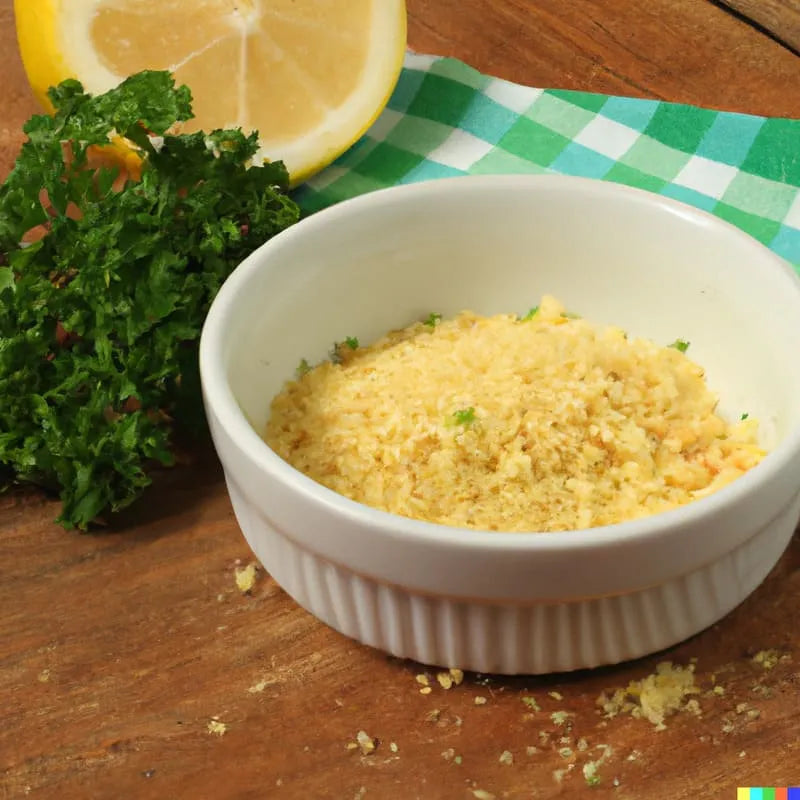
Ingredients
- 6 slices dehydrated white bread
- 1 tablespoon dehydrated parsley
- 1 tablespoon dehydrated lemon zest
Instructions
- Snap a slice of the dried bread before you start anything. It should break with a clean crack — anything that bends is still holding water and will mould the whole jar inside a fortnight.
- Break the slices into rough pieces by hand first. A whole slice rides on top of the blades and gets flung round the bowl without ever being cut.
- Run the bread and the parsley together on the fine setting. The leaf is tough enough to need the bread as an abrasive; on its own it just circles the bowl.
- Stop while there is still some variation in the crumb. Taken to flour it behaves like flour, and the point of a finishing crumb is that you can feel it.
- Stir the lemon zest in by hand at the end, away from the blades. Zest is oil held in a dry carrier, and processing it releases that oil and clumps the crumb.
- Tip the crumb onto a tray for ten minutes before it goes into a jar. Blending warms it, and warm crumb sealed behind glass raises a fog that settles straight back down into it.
- It keeps two months in a cool cupboard. Lemon oil is the first thing to fade, and when the jar smells only of bread you are better grating in fresh zest than throwing it away.
Nutrition
| Per 1 oz (28 g) | Per 100 g | |
|---|---|---|
| Energy | 61 kcal | 215 kcal |
| Protein | 2.8 g | 9.9 g |
| Fat | 0.8 g | 2.7 g |
| saturated | 0.1 g | 0.4 g |
| Carbohydrate | 12.1 g | 42.7 g |
| sugars | 4.6 g | 16.2 g |
| Fibre | 5.8 g | 20.5 g |
| Sodium | 20 mg | 72 mg |
Estimated from the ingredients, for the finished dried product. Actual values vary with the produce you use and how far you dry it.


Leave a comment
Cooked this? Have a question? Comments are read by our team before they appear, and we answer questions here.