FREE SHIPPING ON ORDERS OVER 1.000 kr*  •  TRACK MY ORDER

Schedule A Call
Schedule a call

Dehydrating 101 · Meats

Dehydrated Meats: How to Dehydrate Meat Safely

Dehydrating meat removes the moisture that bacteria, mould and yeast need to grow — leaving a light, shelf-stable food that keeps its protein, iron and zinc.

Strips of dehydrated beef jerky on a wooden board

55–60 °C*

Beef-jerky drying stage

*Starting range for thin strips. Not a complete food-safety process

90 °C

Max machine temperature

On BenchFoods models with settings up to 90 °C

8–10 h

Typical drying time

Beef, pork or lamb jerky at a 6 mm cut

Recipe-led

Storage and keeping time

Follow your tested recipe’s instructions

Why dehydrate meat?

Dehydrating meat has been a popular preservation method in Europe for centuries. As with fruit and vegetables, the process removes only the water content, so protein, vitamins and minerals are largely preserved — leaving a concentrated, nutritious food.

Longer shelf life

Removing moisture inhibits the bacteria, mould and yeast that need water to survive, so meat stores and keeps far longer without spoiling.

Light and compact

Easy to store and transport — particularly useful for camping and hiking, where fresh meat is impractical for weight, space or spoilage reasons.

Ready to eat

Eat as is or rehydrate into recipes. A convenient ready-to-eat protein source for times when access to fresh food is limited.

Less waste

Preserve excess or near-expiration meat that would otherwise be discarded, and put off-cuts to use as pet treats instead of binning them.

Concentrated flavour

Dehydration enhances and intensifies the natural flavour of the meat, producing a rich, savoury snack or cooking ingredient.

Better value, no additives

Ready-made dehydrated meat is costly. Making your own means better value and the assurance that no unwanted preservatives are used.

Food safety: home preparation and commercial production

Making jerky at home

EU food-hygiene Regulation (EC) No 852/2004 excludes food prepared, handled or stored at home for private domestic consumption. Its commercial hygiene and HACCP requirements therefore do not apply to that private domestic activity. [2]

This exemption is separate from food-safety advice. Drying raw meat does not automatically eliminate harmful bacteria. Use a tested recipe and follow guidance from the food-safety authority relevant to your country. USDA’s home-jerky heating recommendation is noted in the drying-time section below as an additional US reference. [1]

Using your dehydrator for a heating stage

BenchFoods models with temperature settings up to 90 °C offer scope for a heating stage as well as drying. A separate oven is not automatically necessary: the equipment must be able to achieve the conditions required by the chosen process.

Where a process uses heat for pathogen reduction, confirm the meat’s internal temperature with a suitable food thermometer and follow the specified holding time and any humidity or airflow conditions. A 90 °C chamber setting alone does not demonstrate an effective treatment. [3]

Producing jerky commercially

EU food businesses must meet applicable hygiene requirements and maintain procedures based on HACCP principles. Additional meat-product, microbiological and national requirements may apply. [2]

The appropriate controls depend on the product and process. Commercial jerky is not governed by a single universal USDA temperature requirement across the EU. Your production method needs appropriate evidence that it controls relevant hazards and supports the intended storage conditions and shelf life.

Consult your national or local competent food authority about the requirements for your operation. Select the recipe, process and equipment together rather than assuming a machine’s maximum temperature establishes compliance.

What about marinades?

Salt, sugar and acidity can contribute to preservation when used in an appropriate formulation. An ordinary marinade should not be assumed to kill harmful bacteria or make raw meat safe. Its contribution depends on the recipe and the overall process. [4]

Tip

Freezing meat before dehydration is optional but makes slicing much easier and helps you hit a consistent 6 mm. It is not a crucial step in the process.

The best meats to dehydrate

An endless list of animals can be dehydrated to deliver tasty results and a wide range of health benefits. Below are the most popular livestock, wild game and poultry across Europe, with the cuts and parameters that matter for each. *Temperatures shown are drying-stage figures, not a complete food-safety process. See the food-safety section.

Livestock

Widely available and highly versatile. Livestock produces jerky, biltong and dried sausages — and sits behind European traditions such as Italian bresaola, Spanish chorizo seco and German Landjäger.

Dehydrated beef strips

Beef (cow)

The default jerky meat — lean, affordable and consistent. Also the classic base for biltong and for European-style air-dried cuts.

Best cuts
Topside, eye of round, flank
Drying time
8–10 hours at 6 mm
Temperature
55–60 °C*
Also makes
Biltong, dried sausage, pet treats
Read the full beef guide →

Dehydrating meat has been a popular preservation method in Europe for centuries, and it remains a favourite way to create long-lasting, nutritious, and flavourful snacks that are high in protein and perfect for hiking, travel, or everyday use. European food culture has a rich history of preserved meats such as Italian bresaola, Spanish chorizo seco, and German Landjäger which showcase how drying and curing have long been valued as a way to enhance flavour and extend shelf life. Dehydration follows in this tradition, offering a modern, efficient method to achieve similar results.

Some of the key reasons for dehydrating meat include:

  • Removing moisture from meat inhibits the growth of bacteria, mould, and yeast, extending shelf life and allowing it to be stored and consumed safely over a longer period.
  • Dehydrated meat is lightweight and compact, making it easy to store and transport. Ideal for camping, hiking, or other situations where carrying fresh meat is impractical due to weight, space, or spoilage concerns.
  • Ready to eat as a snack or rehydrated for meals, dehydrated meat is versatile and has a much longer shelf life than fresh meat, making it a practical and reliable option.
  • Dehydration helps preserve excess or near-expiration meat that would otherwise go to waste. It’s also an effective way to use various off-cuts, which can be dehydrated and kept as pet treats.
  • Dehydrating enhances and intensifies the natural flavour of meat, producing a rich, savoury result.
  • Buying pre-made dehydrated meat products can be expensive. Making your own often provides better value and the reassurance of knowing no unnecessary additives are included.

When dehydrating meat, proper preparation is essential. Drying raw meat does not automatically eliminate harmful bacteria, so use a tested recipe and follow guidance from the food-safety authority relevant to your country. BenchFoods models with temperature settings up to 90 °C offer scope for a heating stage as well as drying, but a chamber setting is not the same as the meat’s internal temperature: confirm it with a suitable food thermometer. See the food-safety section for what is legally required in the EU and what is only recommended. Freezing prior to dehydration is also an option — it can make slicing easier, though it isn’t essential.

An endless variety of animals can be dehydrated to deliver tasty results and numerous health benefits. Below, we highlight the most popular livestock and the different types of meat products you can create, including jerky, offal/organs, sausage, ground/mince, and whole muscle cuts.

Dehydrated lamb

Lamb (sheep)

A distinctive alternative to beef or pork jerky. Less common, but a natural extension of European lamb cookery.

Best cuts
Leg (lean), shoulder (marbled)
Drying time
8–10 hours at 6 mm
Temperature
55–60 °C*
Also makes
Sausages, offal dog treats
Read the full lamb guide →

Sheep, or lamb, offers a unique flavour profile and can be a delicious choice for dehydrated meat products. Lamb jerky, sausages, and offal are all possible options, and although less common than beef, pork, or chicken, lamb provides a tasty alternative for those looking to explore different types of dehydrated meat. Across Europe, lamb is a valued part of traditional cuisine, and turning it into dehydrated products is a natural extension of this heritage. The most popular reason for dehydrating lamb is to create lamb jerky — a flavourful and protein-rich snack that’s lightweight and easy to carry. Lamb jerky offers a distinctive taste compared to more common jerky varieties like beef or pork, making it an appealing option for those who want something a little different in flavour.

Different parts of lamb can be used for dehydration, and each will provide varied tastes, textures and uses:

  • A lean and flavourful cut that’s relatively low in fat, making it a healthier option and good for jerky.
  • A more marbled cut, offering a richer flavour when dehydrated. The higher fat content can result in a more tender and moist final product, though it may also reduce shelf life.
  • Many parts can be dehydrated and used as dog treats, including organs like the liver, heart, ears, trachea, and gullet.

Like other livestock meats, dehydrated lamb is rich in protein, iron, and other vitamins, minerals, and antioxidants, including zinc, phosphorus, and vitamin B12. A nutrient-dense meat, dehydrated lamb can increase muscle mass, enhance performance and endurance, aid muscle recovery, boost immunity, and support overall heart health. It’s also a natural source of omega-3 fatty acids, offering anti-inflammatory benefits.

Dehydrated lamb can also be used in a variety of ways:

  • Make lamb jerky and enjoy it as a high-protein snack that’s perfect for on-the-go.
  • Rehydrate and add to soups, stews or stir-fries.
  • Use thinly sliced dehydrated lamb in sandwiches, wraps or as a protein boost to salads.
  • Add to various rice and grain dishes such as curries or couscous.
  • Create your own dehydrated lamb dog treats.
Dehydrated pork

Pork (pig)

The most versatile animal on this list — jerky, sausage, crackling and pet chews all come off the same carcass. Leaner cuts keep longest.

Best cuts
Ham/leg, loin, shoulder, belly, ears
Drying time
8–10 hours at 6 mm
Temperature
55–60 °C*
Also makes
Rinds/crackling, sausage, pet chews
Read the full pork guide →

Pig meat, or pork, is another popular choice and a versatile dehydration option. Pork can be dehydrated and transformed into a variety of products, including pork jerky, sausages, and offal. Many off-cuts of the pig can also be used for pet treats such as pig’s ears and snouts. Pork rinds — also known as crackling — are a traditional favourite snack across Europe, made from the skin of a pig. Dehydrating the rinds before frying is an essential step that helps achieve their crispy, crunchy texture and ensures consistent results.

Europe also has a long heritage of preserved pork products. Spanish jamón serrano, Italian coppa, and German mettwurst are well-known examples of air-dried or cured pork, showing just how embedded pork preservation is within European food culture. Dehydration continues this tradition in a modern, efficient way, producing snacks and ingredients that fit today’s lifestyles.

Various parts of a pig can be used for dehydration, each with its unique benefits in terms of taste, texture, and culinary applications. Pork is generally considered a fattier meat, so it’s important to remember that the leaner the cut, the longer the shelf life, as fat can become rancid over time. See our list below of various cuts:

  • The rear leg of the pig, known for its lean meat and rich flavour. Its relatively low fat content makes it a good option for dehydration.
  • A lean and tender cut that can be dehydrated to make pork jerky or other dried pork products. It has a milder flavour than many other cuts and is a healthier, low-fat choice.
  • A flavourful and more marbled cut that works well for dehydration. The higher fat content can result in a tender and moist product, but may reduce shelf life.
  • A fatty cut with alternating layers of meat and fat. While rich and full of flavour, the high-fat content can shorten shelf life.
  • Not traditional muscle meat, but popular for dehydration as dog treats, helping clean teeth and providing a long-lasting chew.

Besides the delicious flavour that dehydrated pork offers, there are also several health benefits. Like beef, dehydrated pork is a rich source of high quality protein, vitamins, and minerals, including zinc, iron, and vitamins B6 and B12. These nutrients assist with muscle growth, repair, and maintaining lean muscle mass, while also supporting energy levels, immunity, and overall health.

One thing to consider, however, is that dehydrated pork can be relatively high in fat — especially in cuts like shoulder or belly — so leaner options may be preferable for low-fat snacks or if weight management is a goal. Removing excess fat during preparation also helps extend the shelf life of dehydrated pork.

Favourite ways to use dehydrated pork:

  • Create pork jerky, a protein-rich, convenient snack that’s perfect for hikes, road trips, or to enjoy throughout a busy day.
  • Rehydrate and use it in various dishes like stir-fries, soups, and stews.
  • Combine with nuts, seeds, dried fruits, and other snack items to create a high-energy trail mix.
  • Add thinly sliced or chopped dehydrated pork to your salads for an extra boost of protein and flavour.
  • Thinly slice dehydrated or rehydrated pork and add to sandwiches and wraps for a delicious and filling meal.
  • Add to rice or grain dishes, such as fried rice, pilaf, or quinoa bowls, for a flavourful protein addition.
  • Use rehydrated or crumbled dehydrated pork as a topping for baked potatoes, stuffed peppers, or stuffed mushrooms.
  • Add to your favourite omelette or frittata recipe for a protein-rich breakfast or brunch option.
  • Make crunchy, flavourful pork rinds (chicharron) and enjoy as a delicious snack.

Wild & game meat

Distinct, robust flavours and generally leaner than farmed meat. Game is free-ranging, so it carries no growth hormones or antibiotics, and has a lower ecological footprint than conventional livestock.

  • Venison
  • Wild boar
  • Rabbit & hare
  • Duck & goose
  • Chamois & ibex
  • Elk, reindeer & moose
Dehydrated venison

Venison (deer)

Leaner and higher in protein than beef or pork, with a rich gamey flavour that takes juniper, thyme and red wine marinades well.

Best cuts
Hindquarter, backstrap, tenderloin
Drying time
4–8 hours at 6 mm
Temperature
55–60 °C*
Also makes
Ground jerky, sausage, pet treats
Read the full venison guide →

Venison, or deer meat, is a popular choice for dehydration across Europe due to its lean nature and rich, gamey flavour. Venison jerky is a classic example, and it can be made using both muscle and ground meat, as well as dehydrated sausages and various offal products. A nutritious alternative to more conventional meats, dehydrated venison delivers a distinctive taste that has long been valued in European cuisine. It is leaner and higher in protein compared to beef or pork, making it a favourite for health-conscious consumers. The dehydration process enhances venison’s unique flavour, and it can be seasoned with herbs and spices such as juniper, thyme, rosemary, or red wine marinades — ingredients traditionally used in European game dishes.

Different parts of the deer can be dehydrated, offering varied flavours and textures:

  • A lean and flavourful cut that can be used to make venison jerky or other dried products. Its relatively low-fat content makes it a healthier option, producing a tender and delicious final product.
  • Includes the backstrap and tenderloin, highly prized cuts known for their tenderness and suitability for dehydration.
  • A more marbled cut, offering a richer flavour when dehydrated. The higher fat content produces a moist and flavourful product, though it can shorten shelf life.
  • Nutrient-dense organs such as liver, kidneys, and heart can be dehydrated and used as protein-rich pet treats.

Venison is much leaner than most red meats, with less fat and fewer calories, making it an excellent choice for those monitoring cardiovascular health or fat intake. It is a high-quality, complete source of protein and is considered more nutrient-dense than many alternatives, containing high levels of iron, zinc, and B vitamins. Consuming dehydrated venison can strengthen the immune system, boost energy and performance, assist muscle growth and recovery, enhance brain function, and support weight management.

Dehydrated venison also has environmental benefits, as deer are free-ranging animals that feed naturally in forests and fields. This results in a meat that is free from hormones or antibiotics, while requiring minimal resources, making venison a sustainable and environmentally friendly option.

How to use dehydrated venison:

  • Make deer jerky which is high in protein, low in fat and can be enjoyed as a nutritious snack option.
  • Rehydrate and use in soups, stews, casseroles or stir-fries.
  • Use thinly sliced in wraps and sandwiches.
  • Add rehydrated venison to risotto, grain bowls or curries for added flavour and protein.
Dehydrated wild boar

Wild boar

Leaner than most conventional red meat and higher in iron than pork or chicken. 150 g delivers a large share of an adult’s daily protein.

Best cuts
Loin (lean), shoulder (fibrous)
Drying time
4–8 hours at 6 mm
Temperature
55–60 °C*
Also makes
Long-lasting pet chews, dried strips
Read the full wild boar guide →

Dehydrated wild boar offers an opportunity to experience a truly unique taste of European game, which is both delicious and nutritious. Wild boar meat is lean, containing less fat than most conventional red meats, making it a healthier option and a great choice for the health-conscious consumer, for those looking to lose weight, or as a nutritious pet treat. High in protein and packed with essential B vitamins and minerals such as zinc and omega-3 fatty acids, dehydrated wild boar also contains more iron than pork or chicken, making it a powerful source of nutrition. Dehydration enhances this distinctive meat’s flavour and helps preserve its valuable nutrients. With a lower environmental impact compared to conventional livestock, dehydrated wild boar is also an eco-friendly choice.

The best parts of the wild boar to use for dehydration are:

  • A lean and tender cut suitable for making jerky or dried meat strips.
  • A more fibrous cut, resulting in a chewy texture, perfect for making hearty snacks or long-lasting pet chews.

Wild boar meat is highly nutritious and provides one of the richest natural protein sources available. For example, 150 grams of wild boar meat can deliver a large portion of the daily protein requirements for an adult, along with a significant share of daily iron needs. Dehydrated wild boar can strengthen the immune system, provide energy, improve muscle growth and recovery, support weight management, and contribute to overall health and development. It is also a sustainable choice, as wild boar are free-ranging and not raised under intensive farming practices, meaning the meat is free from growth hormones, antibiotics, or chemicals.

How to enjoy dehydrated wild boar:

  • Create wild boar jerky, which is high in protein and low in fat — a healthy alternative snacking option.
  • Use the offcuts for nutritious dog treats.
  • Rehydrate and add to soups, stews, curries, stir-fries, casseroles or rich meaty sauces.
  • Add thinly sliced rehydrated wild boar to sandwiches, wraps or burgers.

Other European game

Rabbit, hare, duck, goose and alpine species such as chamois and ibex all dehydrate well, as do northern European elk, reindeer and moose. Availability differs by region, and each brings its own flavour profile.

Treat them as you would venison: lean cuts, fat trimmed, uniform 6 mm slices, and a marinade built on juniper, rosemary, garlic, pepper or wine.

Hunting & game processing →

Poultry

Widely available, high in quality protein and lower in fat than most red meat. Rich in B vitamins, iron and zinc, and equally good as a human snack or a pet treat.

Dehydrated chicken

Chicken

Lean, familiar and versatile — the easiest poultry to start with, and a high-value pet treat.

Cuts
Breast, thigh, organs, feet, necks
Time
8–10 hours
Temp
55–60 °C*
Makes
Jerky, shreds, pet treats
Full chicken guide →

Dehydrated chicken is popular across Europe for its versatility, familiar taste, and numerous health benefits. Chicken is an excellent source of lean protein, making it an ideal option for dehydration. The process not only preserves the meat’s nutrients but also extends its shelf life — making it perfect for long-term storage and a wide range of recipes. A lighter alternative to red meats, dehydrated chicken provides many physical benefits, such as strengthening bones and muscles, supporting recovery, and promoting feelings of fullness, which helps to prevent unhealthy snacking.

Cuts of chicken to use for dehydration:

  • A lean, tender cut that yields flavourful dehydrated chicken and is ideal for making jerky or other dried products, providing a high-quality, protein-rich option.
  • A more marbled cut that offers a richer flavour when dehydrated. The higher fat content can result in a tender and moist final product but may shorten shelf life.
  • Organs such as the liver, heart, and gizzard can be dehydrated for nutrient-dense pet treats, along with chicken feet and necks.

Dehydrated chicken is a rich source of protein and contains essential amino acids that support muscle growth and repair. With less fat and fewer calories than many other meats, it’s an excellent choice for those monitoring their fat intake or looking to lose weight. Chicken is also high in vitamins and minerals such as iron, zinc, and B vitamins, which support overall heart health and brain function. Additionally, it is a good source of the amino acid tryptophan, known to enhance serotonin levels in the brain and improve mood.

  • Make chicken jerky or shreds and enjoy it as a protein-rich snack.
  • Add to salads for extra flavour, texture and nutrients.
  • Thinly sliced dehydrated chicken can be used in sandwiches, wraps and burgers.
  • Rehydrate and use in curries, stews, soups, stir-fries and casseroles.
  • Create high-value pet treats — your dog will love you!
Dehydrated quail

Quail

Fastest drying meat on the chart, and a low-allergen alternative for dogs sensitive to chicken, beef or pork.

Cuts
Breast, thigh, off-cuts, feet
Time
3–6 hours
Temp
55–60 °C*
Makes
Jerky, charcuterie, pet treats
Full quail guide →

Perfect for those seeking an alternative to more conventional poultry, dehydrated quail is a traditional European game bird that offers a unique flavour and is high in nutrients. The dehydration process preserves both the nutritional value and the delicate flavour of quail, allowing for long-term storage and use in a variety of dishes. Much like chicken, quail is a lean and tender meat that’s rich in protein, delivering numerous health benefits to both mind and body. As with other meats, dehydrated quail can be seasoned with a wide range of herbs, spices, and marinades to create diverse flavours — juniper, thyme, rosemary, or garlic being classic European pairings.

The following cuts of quail can be used for dehydration:

  • A lean, tender cut that produces excellent dehydrated quail, ideal for making jerky or other dried products.
  • Another lean cut suitable for dehydration, offering a good balance between tenderness and flavour.
  • Although quail is a small bird, its organs and off-cuts can be dehydrated to create nutrient-rich pet treats.

Quail has a very similar nutritional profile to chicken, being rich in protein, iron, zinc, and B vitamins, but its vitamin and mineral content is generally higher. It is a strong source of calcium for bone strength and is particularly high in vitamins A and E, which support skin health and vision. Other benefits include boosting immunity, improving heart and blood health, supporting digestion, and assisting with muscle growth, strength, and recovery.

  • Create nutrient-rich pet treats with quail meat or off-cuts like quail feet. It can be a low-allergen alternative to chicken, perfect for dogs with sensitivities to chicken, beef or pork.
  • Make quail jerky or shred it and add it to nut or trail mixes for a healthy snack option.
  • Add thin slices to salads, sandwiches, wraps or charcuterie boards.
  • Rehydrate and add to various recipes, including stews, curries, soups and casseroles.
Dehydrated turkey

Turkey

Leaner than chicken and more meat per bird — mild flavour makes it a popular lean alternative to beef jerky.

Cuts
Breast, thigh, organs, necks
Time
8–10 hours
Temp
55–60 °C*
Makes
Jerky, sausage, pet treats
Full turkey guide →

Turkey is a classic choice for dehydration in Europe, offering a lean and versatile option for poultry lovers. Dehydrated turkey jerky, sausages, and offal products can all be made using this widely available bird, and its mild flavour makes it a popular option for those seeking a leaner alternative to beef or pork jerky. With an impressive nutritional profile, dehydrated turkey is loaded with protein and a variety of vitamins and minerals. Compared to chicken, turkey is a larger bird and provides more meat overall, while also being the leaner of the two, as it is lower in calories, fat, and cholesterol.

Cuts of turkey that can be used for dehydration:

  • A lean, tender, flavourful cut, ideal for making jerky or other dried products, providing a high-quality, protein-rich option.
  • A more marbled cut that offers a richer flavour. The higher fat content can result in a tender and moist final product, though it may reduce shelf life.
  • Organs such as the liver, heart, and gizzard can be dehydrated for nutrient-dense pet treats, along with turkey necks.

Dehydrated turkey delivers a rich source of protein, essential for muscle development and maintenance, and is packed with B vitamins and minerals including selenium, zinc, iron, and phosphorus. These nutrients boost energy production, improve brain function, strengthen bones, support thyroid health, enhance metabolism, and protect the immune system.

  • Make a flavourful dehydrated turkey jerky, creating a nutritious snack.
  • Use thin slices in salads, sandwiches and wraps.
  • Include in various cheese and charcuterie boards for added protein.
  • Create your own dehydrated turkey pet treats.
Dehydrated pheasant

Pheasant

The largest traditional European game bird — slightly sweeter than chicken, with both white and dark meat.

Cuts
Breast, leg (tougher tendons)
Time
4–8 hours
Temp
55–60 °C*
Makes
Jerky, sausage, dog treats
Full pheasant guide →

Pheasant is the largest of the traditional European game birds, with a slightly stronger flavour than quail, and it can be dehydrated to make pheasant jerky, sausages, and various offal products. Its distinct taste sets it apart from other poultry, delivering a slightly sweeter flavour than chicken, making it a delicious choice for those who enjoy dehydrated meat. Like other game birds, pheasant has both white and dark meat that is generally lean and tender (with the leg meat being tougher), and it is rich in protein and nutrients that provide numerous health benefits.

The best cuts of pheasant to use for dehydration:

  • A lean, tender cut that produces excellent dehydrated pheasant meat, suitable for making jerky or other dried products.
  • A darker cut that can be dehydrated, though it contains tougher tendons compared to the breast.

Because pheasants are hunted or farmed in natural environments across Europe, they are free from hormones, antibiotics, or chemicals that might otherwise affect meat quality. Pheasant is naturally low in fat and calories, while containing high levels of iron, potassium, and B vitamins. Consuming dehydrated pheasant meat supports muscle growth and development, helps maintain a low-fat diet, improves heart health, strengthens the immune system, and provides anti-inflammatory benefits.

Dehydrated pheasant can also serve as a highly nutritious meat for dogs, enhancing vision, supporting muscle and nerve function, and helping to maintain a healthy coat and skin.

  • Get experimental with seasonings and make a flavourful pheasant jerky.
  • Make high-value dog treats with dehydrated pheasant strips.
  • Mix with salads and rice dishes for added texture, nutrients and flavour.
  • Include thinly sliced dehydrated pheasant on various platters or cheese boards for a boost of protein and flavour.

Choosing a machine

Which dehydrator do you need for meat?

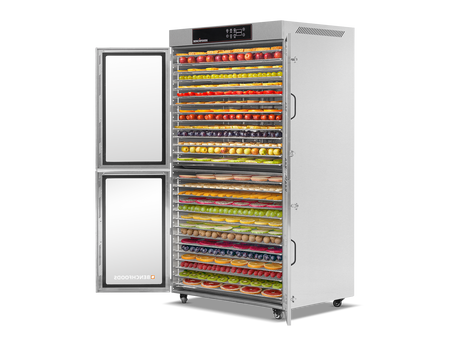
Every BenchFoods machine is built from 304 food-grade stainless steel, and these models have temperature settings up to 90 °C, so they can run a heating stage as well as drying. The only question is batch size.

Talk to a specialist →
1 Zone / 10 Tray / 0.6 m²

Home & hunting

1 Zone / 10 Tray / 0.6 m²

Enough capacity for a hunting season’s venison or a weekly jerky batch. Reaches the full 90 °C on a domestic footprint.

2.567 kr3.964 kr

View machine
1 Zone / 16 Tray — Biltong Bundle

Biltong makers

1 Zone / 16 Tray — Biltong Bundle

Adds the hanging biltong kit and an ambient mode (fans only) for 72-hour air-dried runs at 25 °C.

9.763 kr16.218 kr

View machine
2 Zone / 28 Tray / 11.90 m²

Butchers & producers

2 Zone / 28 Tray / 11.90 m²

Two independent zones for running jerky and pet treats at different temperatures in the same shift.

62.604 kr99.829 kr

View machine

Jerky vs biltong

Both are dried meat, but they are made in opposite ways. Jerky is sliced first and dried with heat over hours. Biltong is cured in vinegar, dried whole without heat over days, and sliced only when you serve it.

Jerky

Beef jerky strips
Method
Dehydrated with heat
Time
Several hours — typically 8–10
Temperature
55–60 °C drying stage for beef*
Cure
Marinade or dry rub
Order of work
Seasoned and cut, then dried
Texture
Firm, dry, pliable without breaking
Typical meats
Beef, pork, poultry and game

Biltong

Biltong
Method
Air-dried without heat
Time
Around 72 hours
Temperature
25 °C
Cure
Brown or cider vinegar, plus salt
Order of work
Dried whole, then sliced to serve
Texture
Firm and chewy, slight softness inside
Typical meats
Most commonly beef or game
Note

Vinegar and salt can contribute to preservation when used in an appropriate formulation, but a cure is not proof that harmful bacteria have been eliminated, and it never replaces a tested recipe. Marinate in brown or cider vinegar, or simply rub or rinse the meat in it if you would rather skip a long soak. Salt also draws out moisture and enhances flavour.

BenchFoods Biltong Unit

The BenchFoods Biltong Unit

Built for the 72-hour ambient dry

100% stainless steel with an ambient mode that runs fans only — so biltong dries at 25 °C, and dried fish and sausages at low or no heat. The same cabinet still reaches 90 °C when you switch back to jerky.

Shop the bundle

Muscle jerky vs ground jerky

Muscle jerky compared with ground jerky
Muscle jerkyGround jerky
Made fromLean whole-muscle cuts, trimmed of fatLean ground or minced meat
PreparationSliced into thin uniform strips, then marinated or seasonedBlended with spices, then extruded with a jerky gun
Texture controlWith the grain is chewier; against the grain is more tenderConsistently tender — easier to chew, better for dental issues
Typical cutsTop round, eye of round, flank steakAny lean mince — a good use for trim
Temperature & time55–60 °C drying stage for beef*, for several hours, depending on thickness55–60 °C drying stage for beef*, for several hours, depending on strip thickness
Best forClassic chew and a longer shelf life from lean, trimmed cutsUniform strips, softer bite, using up mince economically

*Drying-stage temperatures describe drying for texture. They are not a complete food-safety process on their own. See the food-safety section.

Read the full section on jerky and biltong →

Jerky

As mentioned in the various meat categories above, jerky is one of the most popular ways to enjoy dehydrated meat. It offers a tasty, convenient, high-protein snack that’s perfect for on-the-go consumption, particularly for camping, hiking, or travelling. This versatile treat can be made from many types of meat, including beef, pork, poultry, and game meats, providing a wide range of flavour profiles. Both muscle and ground jerky deliver unique textures and flavours, and experimenting with different meats, marinades, and seasonings allows for a wide variety of delicious and satisfying products.

Muscle jerky

Muscle jerky is made from lean cuts of meat, such as top round, eye of round, or flank steak, which are carefully trimmed of fat to ensure a longer shelf life. Fat can become rancid during the dehydration process, so removing it is crucial for preserving the jerky’s quality. The lean meat is then sliced into thin, uniform strips, either with or against the grain, depending on the desired texture. Slicing with the grain produces a chewier jerky, while slicing against the grain results in a more tender product.

If we look at beef jerky, for example, some of the most popular European cuts include:

  • Lean and flavourful, this cut is excellent for jerky due to its low-fat content and consistent texture. It’s also relatively affordable compared to premium cuts.
  • Another lean cut from the hindquarters of the cow, with a similar texture to top round, making it equally suitable for jerky.
  • Known for its strong beef flavour and lean profile, flank steak is another popular choice. It should always be sliced against the grain to ensure tenderness.

After slicing, the meat is marinated or seasoned with herbs, spices, and flavourings to create a unique taste. Popular European-style seasonings include black pepper, juniper, garlic, paprika, and red wine marinades. The marinated meat is then placed on dehydrator trays, ensuring the strips are not touching or overlapping to allow even drying. Muscle jerky is typically dehydrated at a low temperature, with around 55–60 °C a common starting range for beef, for several hours, depending on the thickness of the slices and the desired level of dryness.

Ground jerky

Ground jerky is an alternative made from lean ground meat rather than whole muscle cuts. To prepare it, the ground meat is blended with spices and seasonings, then shaped using a jerky gun, which extrudes the mixture into thin, uniform strips. These strips are placed on dehydrator trays in the same way as muscle jerky.

Ground jerky is also dehydrated at around 55–60 °C for several hours, again depending on strip thickness and the target dryness. One of the main advantages of ground jerky is its tenderness, making it easier to chew and more palatable for individuals who prefer a softer texture or who may have dental issues.

Biltong

Biltong is a traditional South African snack that has also become popular across Europe, particularly among those who enjoy dried meat products. It is most commonly made with beef or game, though other meats can be used. The main difference between jerky and biltong is that biltong is air-dried without heat, often taking several days to dry, whereas jerky is dehydrated at higher temperatures over several hours. Another distinction is in preparation: biltong is usually cured in vinegar, dried whole, and then sliced, while jerky is seasoned and cut prior to dehydration.

Our BenchFoods Biltong Unit can successfully create delicious biltong by drying at 25 °C. Constructed from 100% stainless steel and featuring an ambient mode (fans only), it makes producing your own biltong, dried fish, or sausages simple and efficient.

When preparing meat for biltong, you can remove all the fat for a leaner finished product, or leave a thin layer on the edges, which enhances flavour and creates a chewier consistency once dried. Curing the meat in brown or cider vinegar is a traditional step that contributes to preservation, but it does not replace a tested recipe. The meat can either be marinated in vinegar, or simply rubbed or rinsed in it if you prefer to skip a longer soak.

To season, salt is essential — it draws out moisture, enhances flavour, and contributes to preservation. Combined with black pepper and toasted coriander seeds, you achieve the classic biltong taste. For variations, you can experiment with chilli flakes, garlic, or paprika to create spicier versions.

To make biltong, place the meat in the dehydrator at 25 °C and leave it to dry for around 72 hours, monitoring progress regularly to achieve the texture you prefer. Some enjoy biltong very dry and tough, while others prefer it a little moist and fatty in the centre. A simple test is to squeeze the meat — if there’s still some give, moisture remains inside. Ideally, biltong should be firm and chewy but retain a slight softness.

Once dried, store biltong in an airtight container or vacuum-sealed bag in a cool, dry place. Slice only when ready to serve, cutting with the grain into long thin strips. A sharp kitchen knife is usually sufficient, though if the meat is very dry, a specialist biltong cutter may be needed.

Biltong makes for a flavourful snack or appetiser and is also a unique addition to a European-style cheese or charcuterie board, pairing beautifully with wine, beer, or craft spirits.

What else you can make

Jerky and biltong are the headline products, but the same machine handles dried sausage, nutrient-dense offal, pork crackling and the cubed meat that goes into trail food and meal bases.

Dried sausage selection

Dried sausages

Twiggy sticks and European-style dried sausage — ground lean meat, seasoned, stuffed into casings and hung in the cabinet.

Temp
55–60 °C for several hours
Internal
USDA guide: 71 °C pork & game, 74 °C poultry
Casings
Natural or synthetic, no air pockets
Natural dried pet treats

Offal & pet treats

Liver, heart and kidney are nutrient-dense and cheap. Butchers use the same off-cuts as an extra revenue line.

Temp
55–60 °C for several hours
Prep
Trim fat, slice thin and even
Cost
~€8/kg liver vs €35–40 ready-made
Homemade pork rinds

Pork rinds & crackling

Dehydrating before frying is what makes rinds puff light and crisp instead of curling or cooking unevenly.

Dry
~54 °C until brittle
Fry
~190 °C, seconds only
Prep
Trim fat, cut small and uniform
Dried meat for trail food

Trail food & meal bases

Cube rather than slice, and dried meat becomes the protein in trail mixes, camping meals, stews, curries and grain bowls.

Cut
Cubes or chunks, uniform per batch
Use
Rehydrate into soups, stews, stir-fries
Pairs with
Nuts, seeds and dried fruit
Read the full sections on sausages, offal, pet treats and pork rinds →

Sausages

Dehydrated sausages, such as twiggy sticks, are another popular type of meat product that provide a satisfying, high-protein snack option. They can be made from a variety of meats, including beef, pork, poultry, and game, and offer endless possibilities when it comes to flavour profiles. Europe has a long tradition of dried and cured sausages — such as Italian salamini, Spanish chorizo seco, and German Landjäger — and dehydrating sausages follows a similar principle, making them portable, long-lasting, and delicious.

The process of making dehydrated sausages begins with selecting lean cuts of meat and grinding them to achieve a consistent texture. Seasonings, spices, and flavourings are then added to the ground meat to create distinctive tastes. Some recipes may also include curing salts, which preserve the meat and enhance flavour. Once seasoned, the mixture is stuffed into casings — either natural or synthetic depending on preference and the style of sausage. Casings should be filled evenly without air pockets, as trapped air can cause uneven drying and spoilage.

After the sausages are stuffed, they are hung in a dehydrator with a controlled temperature. Sausages are typically dehydrated at around 55–60 °C for several hours, depending on thickness and the desired dryness. Internal temperatures should be monitored with a food thermometer. USDA guidance is 71 °C for pork and game meats and 74 °C for poultry. This is US safety guidance, not an EU legal requirement for private domestic preparation, and commercial producers should follow a validated process agreed with their competent food authority.

Creating your own dehydrated sausages offers several advantages over store-bought products. You can control the quality of the ingredients, choose the best cuts, and customise flavour profiles to suit your taste — experimenting with herbs like rosemary, thyme, or sage, or spices such as paprika, fennel, and pepper. Making sausages at home can also be more cost-effective, especially when buying meat in bulk and producing large batches.

Offal and organ meats

Offal and organ meats, also known as off-cuts, are nutrient-dense and flavourful options for dehydration. These include liver, heart, kidney, and more — cuts that are often overlooked in favour of muscle meats, despite their nutritional richness. In Europe, offal has long been valued in traditional dishes, from French pâtés and terrines to British haggis and German leberwurst, and dehydrating them provides another way to enjoy their benefits in a modern, convenient form.

Packed with vitamins, minerals, and amino acids, offal delivers powerful nutritional support. For example, liver is a rich source of iron, vitamin A, and vitamin B12, while heart contains high levels of coenzyme Q10, which supports cardiovascular health. Dehydration preserves this nutritional content while creating a portable product.

When selecting offal, always choose fresh, high-quality cuts from a reputable source. Excess fat and connective tissue should be trimmed to improve shelf life and reduce spoilage. Before dehydration, offal should be sliced into thin, uniform pieces for even drying. Some types, such as liver, can benefit from soaking in milk or water for several hours to reduce strong flavours.

Seasoned or marinated offal can then be dehydrated at around 55–60 °C for several hours, depending on thickness. As with other meat products, USDA guidance for internal temperature is 71 °C for pork and game offal and 74 °C for poultry; check with a food thermometer.

Dehydrated offal and organ meats provide a unique opportunity for culinary creativity, with diverse flavours and textures that can be enjoyed as nutrient-rich snacks or added to recipes. They can be incorporated into grain bowls, salads, pasta dishes, or even used in pet nutrition, offering both variety and nourishment.

Offal & off-cuts for pet treats

Dehydrating offal and off-cuts for pet treats, particularly for dogs, has become increasingly popular across Europe due to their cost-effectiveness, nutritional benefits, and even business opportunities for butchers. Not only does it minimise wastage, but it helps save money compared to purchasing pre-made store alternatives while keeping pets happy and healthy at the same time.

These off-cuts provide a wide range of textures, flavours, and nutritional benefits for pets, making them highly popular choices for homemade dehydrated treats. Much like humans, pets benefit from the nutrient-rich properties of organ meats. Liver, kidney, and heart are packed with essential vitamins, minerals, and amino acids that support overall health. Dehydrating these cuts for pet treats creates a convenient, long-lasting, and portable option for owners who want to ensure their pets are receiving high-quality nutrition.

One of the biggest advantages of dehydrating your own offal and off-cuts is cost savings. Store-bought pet treats can be expensive — especially those marketed as “natural” or “premium.” By dehydrating at home, owners can create high-quality, additive-free treats at a fraction of the cost. For example, a kilo of beef liver from a local butcher or supermarket in Europe might cost around €8, while the same weight in ready-made dehydrated liver treats can cost €35–€40 or more. Home dehydration allows you to produce an equivalent quantity of treats for significantly less, while maintaining control over the ingredients.

Butchers can also take advantage of the growing demand for natural, dehydrated pet treats by producing them in-house and offering them directly to customers. This not only reduces waste by using more parts of the animal but also creates an additional revenue stream. By highlighting the nutritional benefits and cost savings of dehydrated pet treats, butchers can expand their product range, strengthen customer loyalty, and appeal to Europe’s growing market of health-conscious and budget-savvy pet owners.

Pork rinds

Dehydrating pork rinds before frying has several benefits that contribute to a superior end product. Firstly, it removes excess moisture from the skin, allowing it to become exceptionally crispy and light once fried. Dehydration also helps break down the proteins and collagen in the skin, resulting in a more tender and less chewy texture. This process further reduces the risk of the rinds curling up or cooking unevenly during frying.

To prepare pork rinds for dehydration, begin by trimming away any excess fat from the skin and cutting it into small, uniform pieces. Consistency in size ensures even drying and better frying results. Arrange the pork rinds on dehydrator trays, making sure they are not touching or overlapping. Dehydrate at a low temperature of around 54 °C for several hours, or until the pieces are completely dry and brittle. Drying times will vary depending on the thickness of the skin, so it’s important to check periodically to monitor progress.

Once thoroughly dehydrated, the pork rinds are ready for frying. Heat oil in a deep fryer or heavy-bottomed pot to about 190 °C. Carefully lower the dried rinds into the hot oil, avoiding overcrowding, as this can lower the oil temperature and lead to uneven cooking. Fry until the rinds puff up and turn golden brown, which typically only takes a few seconds. Remove them with a slotted spoon and place on paper towels to drain any excess oil. While still hot, season with salt or your choice of spices — paprika, garlic powder, or even chilli flakes are all excellent options — and enjoy them as a delicious, crunchy snack.

How to dehydrate meat

Six steps, whatever the animal. How you cut depends on how you plan to use it — thin slices for jerky, cubes or chunks for cooking — but everything in a batch must be cut the same way for even drying.

  1. Choose and trim a lean cut

    Select lean cuts and trim away visible fat. Fat turns rancid in storage, so the leaner the cut, the longer the finished product keeps. Offal should have connective tissue removed as well; liver benefits from a soak in milk or water to soften strong flavours.

    • Lean cuts only
    • Trim all visible fat
    • Fresh, reputable source
  2. Slice to uniform thickness

    For jerky, slice thinly — approximately 6 mm (¼ inch). For cooking and recipes, cut cubes or chunks instead. Either way, keep every piece in a batch the same size so they finish at the same time. Slicing with the grain gives a chewier result; against the grain is more tender.

    • 6 mm for jerky
    • Uniform within the batch
    • Freeze first for easier slicing
  3. Marinate or apply a dry rub

    Optional, but this is where the flavour comes from. Marinate slices for several hours or overnight, or coat them in a dry rub. European classics work well: red wine, garlic, rosemary and pepper for livestock; juniper, thyme and bay for game; sage, tarragon and paprika for poultry.

    • Several hours or overnight
    • Marinade or dry rub
  4. Load the trays with air gaps

    Lay strips on the trays so they are not touching or overlapping. Airflow around every surface is what makes drying even — overlapped pieces hold moisture and are the usual cause of a batch that spoils in storage.

    • No touching or overlapping
    • Sausages hang, strips lie flat
  5. Set the drying stage and check the meat’s temperature

    For thin beef strips, 55–60 °C is a starting range for the drying stage. It is not a complete food-safety process on its own: follow your tested recipe’s pathogen-control instructions, and where a process uses a heating stage, confirm the meat’s internal temperature with a suitable food thermometer. A chamber setting is not the same as the meat’s internal temperature. See the food-safety section.

    • 55–60 °C beef drying start
    • Check internal temperature
    • Follow your tested recipe
  6. Test, cool and seal

    Jerky feels ready when it is firm, dry to the touch and pliable without breaking, but texture is a quality check, not proof of safety or shelf stability. If it feels moist or tears easily, it needs more time. Cool fully, store it as your tested recipe directs and mark it with the date.

    • Firm, dry, pliable
    • Cool before sealing
    • Label with the date

Prep differences by meat type

Livestock

Select lean cuts and trim visible fat, as fat can turn rancid in storage. Slice to approximately 6 mm. Marinate for several hours or overnight — red wine, garlic, rosemary or pepper are excellent.

Wild & game

Treat as livestock, but take extra care that the meat comes from a healthy source and is free of parasites or disease. Marinating is strongly recommended — juniper, thyme or bay leaves complement game flavours.

Poultry

Ensure the meat is fresh and free from spoilage. Remove skin, bones and excess fat, then slice into thin strips or small cubes. Sage, tarragon and paprika are common European seasonings.

Read the full pre-treatment & preparation section →

When preparing meat for dehydration, you’ll often find guidance suggesting a heating stage before or during drying. Whether that is legally required depends on who is making the food: EU Regulation (EC) No 852/2004 excludes private domestic preparation, while food businesses must meet applicable hygiene and HACCP-based requirements. Heating guidance such as USDA’s is a safety recommendation, not an EU legal requirement for private domestic preparation. See the food-safety section.

At BenchFoods, our machines are built from high-quality 304 food-grade stainless steel, making them ideal for dehydrating meat and other produce. BenchFoods models with temperature settings up to 90 °C offer scope for a heating stage as well as drying, so a separate oven is not automatically necessary. A chamber setting is not the same as the meat’s internal temperature, and it does not by itself demonstrate an effective treatment.

How you cut your meat will depend on your storage and cooking needs. For jerky, meat should be sliced thinly prior to dehydration. If the meat will later be used in cooking or recipes, you may prefer to cut it into cubes or chunks. Always ensure cuts are uniform within a batch to guarantee even drying times and consistent results.

Livestock pre-treatment & preparation. For livestock such as beef, pork, or lamb, it’s important to select lean cuts and trim away visible fat, as fat can turn rancid in storage. Once trimmed, slice into thin, uniform pieces of approximately 6 mm (¼ inch). This ensures even dehydration and proper preservation. Optionally, marinate the slices for several hours or overnight to enhance flavour — European-style marinades such as red wine, garlic, rosemary, or pepper are excellent options.

Wild/game meat pre-treatment & preparation. Game meats such as venison, boar, or pheasant should be treated similarly to livestock. Extra care should be taken to ensure meat comes from a healthy source and is free of parasites or disease. As with livestock, select lean cuts, trim away fat, and slice uniformly. Marinating is strongly recommended here too, with classic European seasonings such as juniper, thyme, or bay leaves complementing game flavours.

Poultry pre-treatment & preparation. For poultry like chicken, turkey, duck, or quail, always ensure the meat is fresh and free from spoilage. Remove skin, bones, and excess fat, then slice into thin strips or small cubes for efficient dehydration. Poultry also lends itself well to seasoning or marinating — herbs like sage, tarragon, or paprika are often used in European cooking to enhance flavour.

Marinades and dry rubs

The options are endless. Whether it be a combination of herbs and spices or a sweet marinade, the table below sets out what works with each family of meat.

Marinades, rubs, herbs, sweeteners and smoke for each meat family
Flavour typeLivestockWild & gamePoultry
MarinadesSoy, Worcestershire, teriyaki, barbecue or hot sauce with oil, vinegar or citrus juice. Add garlic, onion or ginger as desired.Red wine, balsamic or apple cider vinegar bases complement rich game. Add garlic, juniper berries or mustard for extra zing.Lemon or lime juice, olive oil, garlic and herbs for a fresh, zesty marinade — or soy, sesame oil, ginger and garlic.
Dry rubsChilli powder, cumin, paprika, garlic powder, onion powder and black pepper. Adjust proportions for a custom blend.Chilli powder, cumin, garlic powder, onion powder, black pepper and salt enhance the natural flavours of game.Smoked paprika, garlic powder, onion powder, cayenne, black pepper and salt for a well-rounded rub.
Herbs & spicesRosemary, thyme, oregano, cumin or coriander add depth of flavour.Sage, rosemary, thyme or bay leaves add complexity and balance.Tarragon, dill, parsley, basil or coriander add brightness and freshness.
SweetenersA small amount of brown sugar, honey or maple syrup in the marinade or rub.Fruit preserves such as cranberry or cherry for a sweet and savoury twist.Honey, agave nectar or maple syrup pair well with poultry.
SmokeSmoking during dehydration adds a smoky flavour that complements the natural taste of beef.——

Mix and match ingredients, adjust proportions and explore new combinations to create unique flavours that suit your preferences. For dry rubs, see our guide on making your own dehydrated powders.

Salt, sugar and acidity can contribute to preservation when used in an appropriate formulation. An ordinary marinade should not be assumed to kill harmful bacteria or make raw meat safe. Its contribution depends on the recipe and the overall process. [4]

Meat drying time chart

Times and temperatures below are starting points for a 6 mm jerky cut. Drying temperature is not a complete food-safety process, and drying time varies with thickness, marinade, tray loading and operating conditions. Thinner slices dry faster than chunks.

Drying time and temperature for each meat
MeatCategoryDrying timeDrying tempNotes
BeefLivestock8–10 hours55–60 °C*The most popular jerky meat — topside, eye of round and flank.
PorkLivestock8–10 hours55–60 °CTrim hard; fattier cuts like shoulder and belly shorten shelf life.
LambLivestock8–10 hours55–60 °CLeg is the lean choice; shoulder gives a richer, moister result.
Deer (venison)Wild & game4–8 hours55–60 °CVery lean — works as both muscle and ground jerky.
KangarooWild & game4–8 hours55–60 °CExtremely lean red meat; dries quickly, watch for over-drying.
EmuWild & game4–8 hours55–60 °CLean poultry-style red meat.
BoarWild & game4–8 hours55–60 °CLoin for jerky, shoulder for chewy snacks and long-lasting pet chews.
BisonWild & game4–8 hours55–60 °CLean and high in iron; treat like venison.
ChickenPoultry8–10 hours55–60 °CRemove skin, bones and fat first. Feet and necks make pet treats.
QuailPoultry3–6 hours55–60 °CSmall bird, fastest on the chart. Low-allergen pet treat option.
TurkeyPoultry8–10 hours55–60 °CLeaner than chicken and yields more meat per bird.
PheasantPoultry4–8 hours55–60 °CBreast dries best; leg meat carries tougher tendons.
OstrichPoultry4–8 hours55–60 °CDark, lean red meat despite being a bird.
How to tell

This is a general guideline — monitor progress and check periodically. Your jerky feels ready when it is firm, dry to the touch, and pliable without breaking. If it feels moist or tears easily, give it more time. Texture is a quality check; it does not confirm that pathogens have been controlled or that the jerky is suitable for room-temperature storage.

*Food-safety recommendation: USDA advises home users to heat beef to an internal temperature of 71.1 °C before dehydration using wet heat, then dry it. This is US safety guidance, not an EU legal requirement for private domestic preparation. A chamber-temperature setting is not the same as the meat’s internal temperature. See the food-safety section above. [1]

How to store dehydrated meat

Storage decides how long your work lasts. How you plan to use the meat determines the method, and the method determines the shelf life. Shelf life always varies with fat content, storage conditions and local humidity — leaner cuts last longer.

The keeping times below are general guides for jerky made from a tested recipe, so follow the storage instructions and keeping time for your recipe. If your home recipe does not establish safe room-temperature storage, keep the jerky refrigerated or freeze it for longer storage. Appearance, bend tests and dryness alone do not establish shelf stability. For commercial products, establish shelf life and storage instructions for the actual formulation, process and packaging. [4]

Storage methods compared by shelf life
MethodShelf lifeBest forRequirements
Airtight container1–2 monthsMeat you will eat within a few weeksCool, dark, dry place away from sunlight and heat; completely sealed; label with the date
Vacuum-sealed bagSeveral monthsBatch production, gifting, bulk buysComplete seal, minimal oxygen, cool dark storage
Vacuum-sealed + oxygen absorber in a Mylar bagLong-termThe most reliable option for stockpilingOxygen absorber inside; Mylar sealed fully
Sealed bags in the freezerYears to decadesBulk production and stockpiling jerkySealed before freezing; ideal for maximum preservation
Glass jars, ceramic crocks or metal tinsDaily accessReady-to-eat portions in the kitchenKeep the bulk supply sealed separately in a pantry or freezer
Critical — when to discard

Always inspect dehydrated meat before eating. If you notice any off odours, mould or changes in appearance, discard it immediately. This may indicate the meat was not fully dried, or that it was improperly sealed during storage.

Practical storage habits

  • Mark every container with the date of dehydration so you can track freshness.
  • Keep smaller ready-to-eat portions accessible; keep bulk supplies sealed away.
  • Store leaner cuts for longer — fat is what turns rancid.
  • Minimise exposure to oxygen, light and moisture at every stage.
  • Cool the meat completely before it goes into a sealed container.
Read the full storage section →

Storing dehydrated meat correctly is essential to maintaining its quality, taste, and safety. Proper storage not only preserves flavour but also reduces the risk of foodborne illnesses. The way you plan to use your dehydrated meat will influence how best to store it, which in turn determines how long it will last. By following recommended storage methods, you can enjoy these nutritious products for much longer without compromising on safety.

If you plan to consume your dehydrated meat within a few weeks, the best method is to use airtight containers or vacuum-sealed bags, kept in a cool, dark, and dry place away from direct sunlight and heat sources. Make sure the container is completely sealed, as minimising exposure to oxygen, light, and moisture is key to preventing spoilage. It’s also a good idea to mark containers with the date of dehydration so you can keep track of freshness.

As a general rule, dehydrated meats made from a tested recipe may last for 1–2 months at room temperature when stored in airtight containers, provided the recipe and process support room-temperature storage. For longer-term storage, vacuum-sealing with an oxygen absorber inside a Mylar bag is the most reliable option. For maximum preservation, placing sealed bags in the freezer can extend shelf life for years to decades, making this approach ideal for bulk production and stockpiling jerky or other dried meat products.

Shelf life will always vary depending on factors such as fat content, storage conditions, and local humidity levels. Leaner cuts usually last longer, as fat is prone to turning rancid. Always inspect dehydrated meat before consumption — if you notice any off odours, mould, or changes in appearance, the product should be discarded immediately. This may indicate that the meat was not fully dried or that it was improperly sealed during storage.

In many European households, a practical approach is to store smaller, ready-to-eat portions of dehydrated meat in glass jars, ceramic crocks, or metal tins, which can be accessed daily, while keeping bulk supplies sealed in vacuum packs or Mylar bags in a pantry or freezer. This not only preserves freshness but also makes it easier to portion snacks or ingredients for cooking while protecting the main stockpile.

Dehydrated meat FAQs

The questions we get asked most often about drying meat safely at home and in production.

All BenchFoods FAQs →
Do I need to cook meat before dehydrating it?

Not automatically. A suitable dehydrator can be used for a heating stage if it meets the chosen process’s conditions. Check internal meat temperature and any required holding time, humidity and airflow rather than relying solely on the chamber setting. [3]

What temperature should I use to dry beef jerky?

For thin beef strips, 55–60 °C is a starting range for the drying stage. It is not a complete food-safety process on its own. Follow your tested recipe’s pathogen-control instructions as well as its drying settings.

Is homemade beef jerky safe to eat?

It can be, when it is made from a tested recipe. Drying raw meat does not automatically eliminate harmful bacteria, so follow your recipe’s pathogen-control instructions and check the meat’s internal temperature with a suitable food thermometer rather than relying on the chamber setting. [1]

Is a heat step legally required when making jerky at home?

EU Regulation 852/2004 excludes private domestic food preparation from its scope; it does not impose its commercial processing requirements on home users. Safety recommendations remain relevant. For countries outside the EU, consult the rules and guidance applicable there. [2]

Does a sugary or salty marinade make the meat safe?

It should not be assumed to. These ingredients can contribute to preservation, but an ordinary marinade is not proof that harmful bacteria have been eliminated. [4]

What changes if I want to sell my jerky?

Commercial production brings food-business obligations, including applicable hygiene and HACCP-based procedures. Speak to your competent food authority about registration or approval, process controls and other requirements before starting. [2]

Which guidance applies in Europe?

For EU legal requirements, start with EU legislation and the competent authority in your country. EFSA provides scientific advice; USDA guidance is a US reference and should not be treated as European law. Countries outside the EU have their own applicable frameworks. [5]

What’s the difference between jerky and biltong?

Jerky is dehydrated at higher heat over several hours. Biltong is air-dried at 25 °C, cured in vinegar first, and takes around 72 hours to dry.

How long does it take to dehydrate meat?

At a 6 mm cut, beef, pork, and lamb take 8–10 hours, chicken 8–10 hours, most game meats 4–8 hours, and quail 3–6 hours.

How long does dehydrated meat last?

It depends on your recipe and process. If a tested recipe supports room-temperature storage, jerky may keep for around 1–2 months in an airtight container; if not, keep it refrigerated or freeze it. Appearance and dryness alone do not establish shelf stability. [4]

What thickness should I slice meat for jerky?

Around 6 mm, sliced uniformly so every piece dries at the same rate.

Can I use offal and off-cuts for pet treats?

Yes, liver, heart, and kidney dehydrate well and are nutrient-dense — a low-cost way to make treats and reduce waste from cuts that would otherwise be discarded.

What’s the best way to know if jerky is fully dried?

It should be firm, dry to the touch, and pliable without breaking. If it feels moist or tears easily, it needs more time.

Serious about dehydrating

Machines built for meat, not adapted for it

304 food-grade stainless steel throughout, models with temperature settings up to 90 °C that can run a heating stage as well as drying, and an ambient fans-only mode for biltong. From a 10-tray domestic unit to a 10-trolley industrial line.

BenchFoods 16 tray dehydrator
▲